Calendar
Kamakura bloom and crowd calendar 2027
Table of contents
The flowers and leaves around Kamakura follow the weather, so the dates move by a week or two from one year to the next. This calendar gives the most likely 2027 date for each event, the range it will probably fall in, and the earliest and latest dates of recent years. It also marks the days when Kamakura is at its busiest.
The dates are for the Japan Meteorological Agency's observation trees at the Yokohama observatory, the nearest official station to Kamakura. Gardens in Kamakura's shaded valleys will not match the observatory tree to the day, so treat each date as the centre of a window.
2027 at a glance
Modelled dates
| Event | Most likely | Likely range | Earliest / latest, last 10 or 10 years | 1991-2020 average |
|---|---|---|---|---|
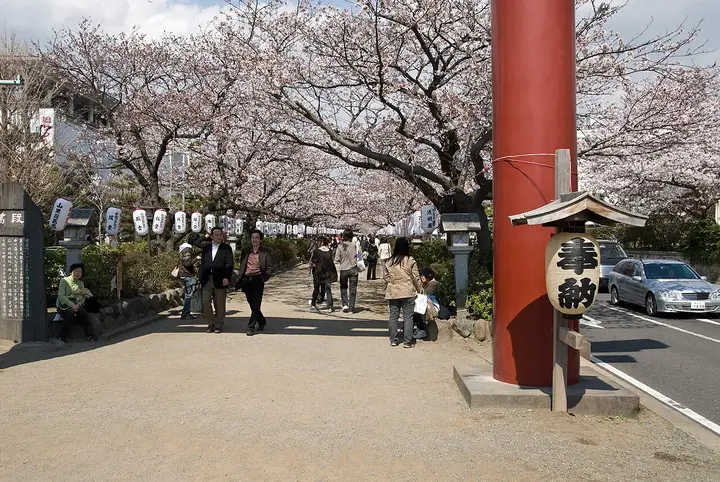
| Cherry blossom opens Somei-yoshino first bloom | 21 Mar | 10 Mar to 1 Apr | 15 Mar / 1 Apr | 25 Mar |
| Cherry blossom full bloom Somei-yoshino full bloom | 31 Mar | 23 Mar to 8 Apr | 22 Mar / 9 Apr | 1 Apr |
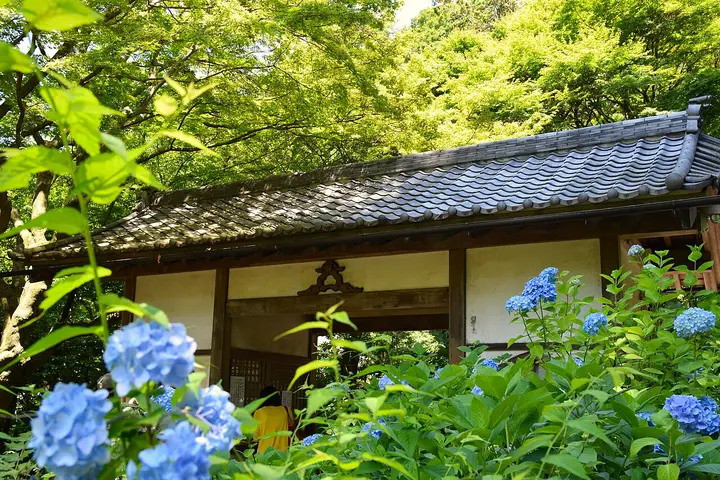
| Hydrangea first bloom first hydrangea flowers open | 11 Jun | 3 Jun to 17 Jun | 28 May / 21 Jun | 12 Jun |
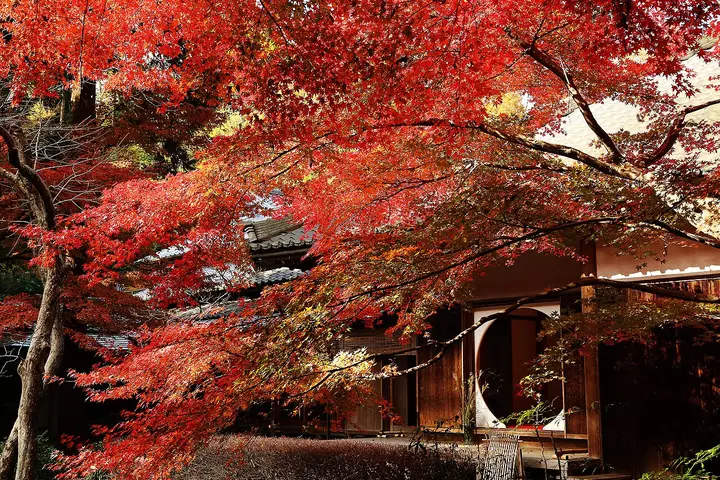
| Ginkgo turns yellow ginkgo leaves mostly yellow | 6 Dec | 28 Nov to 14 Dec | 25 Nov / 9 Dec | 30 Nov |
| Maple turns red maple leaves mostly red | 19 Dec | 14 Dec to 24 Dec | 4 Dec / 24 Dec | 14 Dec |
For cherry blossom, full bloom has come a median of 10 days after the first flowers over the last 20 years. For hydrangea the agency records only the first flowers, so the gardens fill out in the weeks after that date. Ginkgo and maple dates mark the day the observation tree has mostly changed colour.
Plan around the range rather than the single date, and check the temple's own updates in the week before you go: Hasedera, Meigetsu-in and the city's tourism association post the state of the flowers.
The last ten years
| Year | Cherry blossom opens | Cherry blossom full bloom | Hydrangea first bloom | Ginkgo turns yellow | Maple turns red |
|---|---|---|---|---|---|
| 2017 | 25 Mar | 6 Apr | 7 Jun | 26 Nov | 4 Dec |
| 2018 | 19 Mar | 27 Mar | 3 Jun | 9 Dec | 23 Dec |
| 2019 | 21 Mar | 1 Apr | 14 Jun | 9 Dec | 16 Dec |
| 2020 | 18 Mar | 28 Mar | 8 Jun | 9 Dec | 22 Dec |
| 2021 | 17 Mar | 27 Mar | 2 Jun | 9 Dec | 24 Dec |
| 2022 | 21 Mar | 28 Mar | 7 Jun | 5 Dec | 19 Dec |
| 2023 | 15 Mar | 25 Mar | 7 Jun | 7 Dec | 21 Dec |
| 2024 | 1 Apr | 7 Apr | 10 Jun | 5 Dec | 20 Dec |
| 2025 | 25 Mar | 4 Apr | 16 Jun | 28 Nov | 15 Dec |
| 2026 | 22 Mar | 1 Apr | 28 May | – | – |
A dash means no observation that year (or, for 2026, not observed yet).
Crowd calendar 2027
Kamakura is busiest on weekends and national holidays, and most of all when those fall inside a bloom window. The days to avoid if you can:
- New Year, January 1 to 3: the first shrine visit (hatsumode) brings the year's largest crowds to Tsurugaoka Hachimangu.
- Golden Week, April 29 and May 3 to 5: every major sight and the Enoden are at their peak.
- Hydrangea weekends in June: queues at Meigetsu-in, at Hasedera's hydrangea path and on the Enoden platforms.
- Late November to mid-December weekends: autumn colour at the Zen temples of Kita-Kamakura.
National holidays in 2027:
- Fri 1 Jan
- Mon 11 Jan
- Thu 11 Feb
- Tue 23 Feb
- Sun 21 Mar
- Mon 22 Mar
- Thu 29 Apr
- Mon 3 May
- Tue 4 May
- Wed 5 May
- Mon 19 Jul
- Wed 11 Aug
- Mon 20 Sept
- Thu 23 Sept
- Mon 11 Oct
- Wed 3 Nov
- Tue 23 Nov
On bloom weekends a night in town puts you at the gates at opening time: Hotel Metropolitan Kamakura is a short walk from Kamakura Station (more on where to stay). For a guided day, a hydrangea-season day tour from Tokyo covers Meigetsu-in and Hasedera in June, and a Kita-Kamakura autumn colours walk covers the Zen temples in late autumn.
On any busy day, arrive before the temples open and do Hasedera, the Great Buddha or Meigetsu-in first. The day planner builds a route for your date and flags holidays and bloom windows.
How the dates are worked out
The source is the Japan Meteorological Agency's plant phenology record for the Yokohama observatory, which goes back to 1953. For each event the most likely 2027 date is the median of recent years; how many recent years (10, 15, 20 or 30) was chosen per event by which window predicted best on 2005 to 2022: cherry opening 10, cherry full bloom 20, hydrangea 20, ginkgo 10, maple 15 years.
Tested on 2023, 2024 and 2025 using only earlier years, the median landed within a week of the real date in 12 of 15 cases. The misses were the late 2024 cherry blossom (opening and full bloom) and the early 2025 ginkgo, so every range shown here is widened to cover misses of that size. In 2026 the hydrangea opened on May 28, two weeks before the median, which is why the earliest date is shown next to every range.
Download the data
The modelled 2027 dates and every observed year are free to reuse with a link to this page (CC BY 4.0): bloom-2027.json. Raw observations: JMA phenology data.