Temples
Meigetsu-in, Kamakura's hydrangea temple
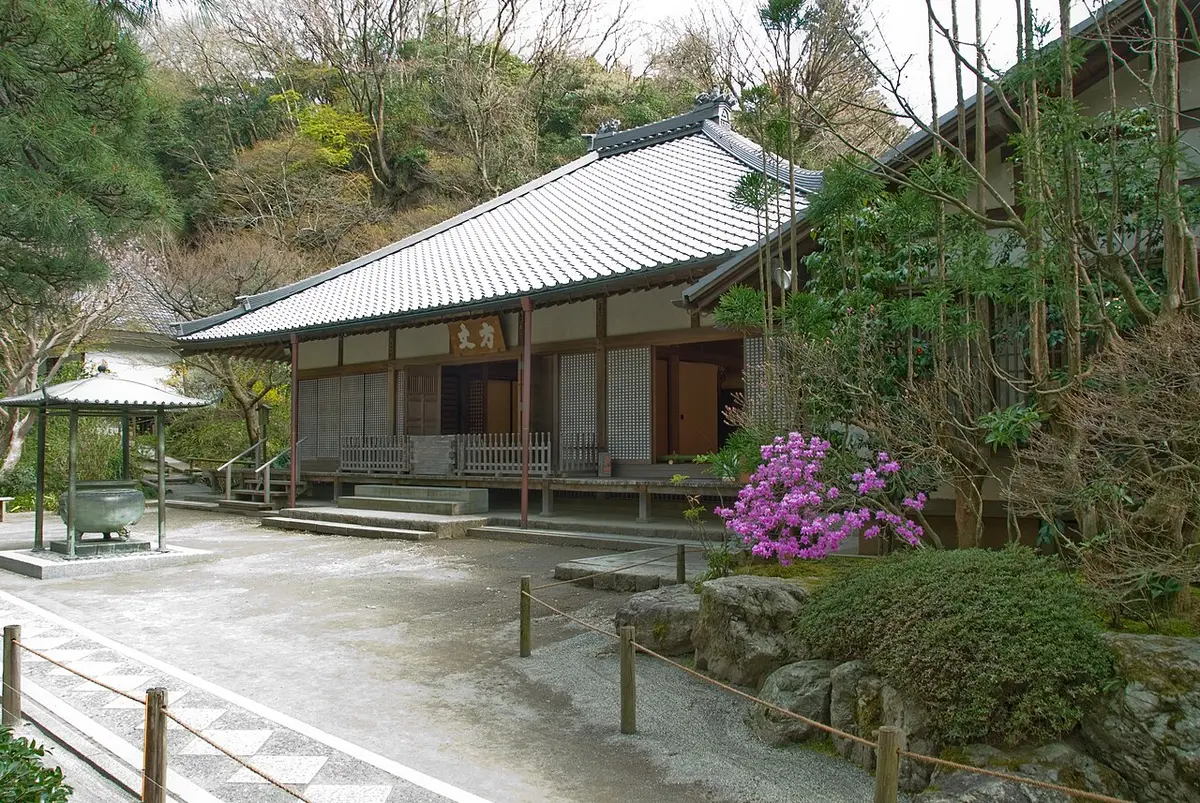
Table of contents
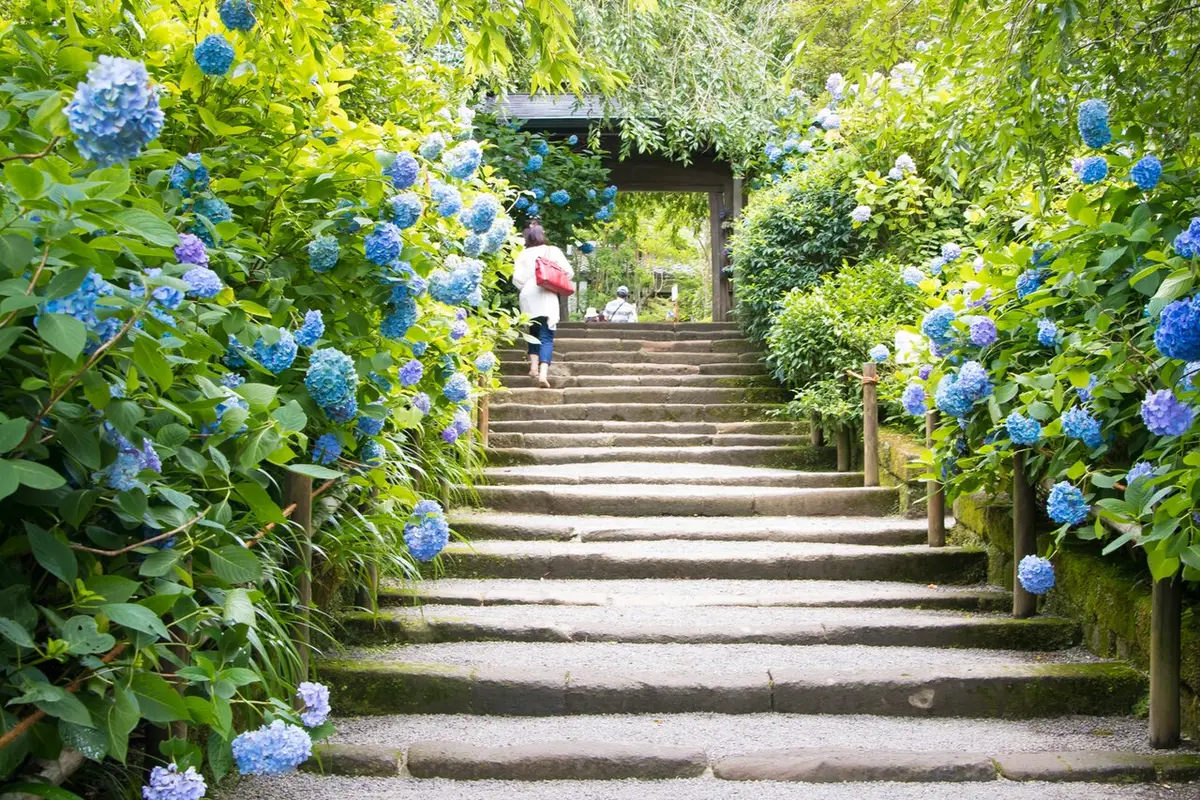
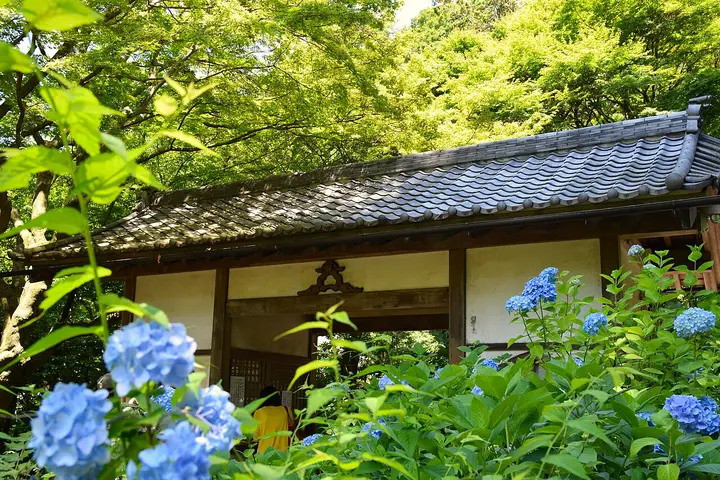
Meigetsu-in is a small Zen temple in a side valley of Kita-Kamakura, about 10 minutes on foot from Kita-Kamakura Station. In June it is Kamakura’s best-known hydrangea temple: about 2,500 hydrangeas, most of them one deep blue, line the stone approach. Admission is ¥500. The rest of the year it is a quiet temple with a famous round window, a raked-sand garden and the largest rock-cut tomb in the city. The one thing to plan: in hydrangea season, be at the gate when it opens.
Meigetsu-in at a glance
Fee ¥500 (child ¥300)Hours 9:00-16:00June 2026 8:30-17:00, last entry 16:30Rear garden ¥500 extra, seasonalFrom Kita-Kamakura Stn 10 min walkMapOfficial site
Meigetsu-in has no website of its own. Fees, hours and the season’s changes are published by the Kamakura City Tourism Association, which also posts the June hours and bloom reports each year on its hydrangea page.
- Admission: ¥500 for high school students and adults, ¥300 for elementary and junior high school students. Free with a disability certificate, plus one companion.
- Hours: 9:00 to 16:00 for most of the year. In June 2026 it opened 8:30 to 17:00, last entry 16:30, from June 1 to June 30.
- Rear garden: ¥500 on top of admission, only during its special openings.
- Closed: while the hydrangeas are pruned after the season; the temple sets the dates each year.
- Address: 189 Yamanouchi, Kamakura. Phone 0467-24-3437.
The temple began in 1159 as Meigetsu-an, a memorial hall built by a son for a warrior killed in the Heiji rebellion. Around 1380 Uesugi Norikata, the shogunate’s deputy for the Kanto region, enlarged the complex and the hall became Meigetsu-in, one of the sub-temples of a larger monastery, Zenkoji. Zenkoji closed in the early Meiji period and Meigetsu-in is all that remains. It belongs to the Kenchoji branch of Rinzai Zen.
Hydrangea season at Meigetsu-in
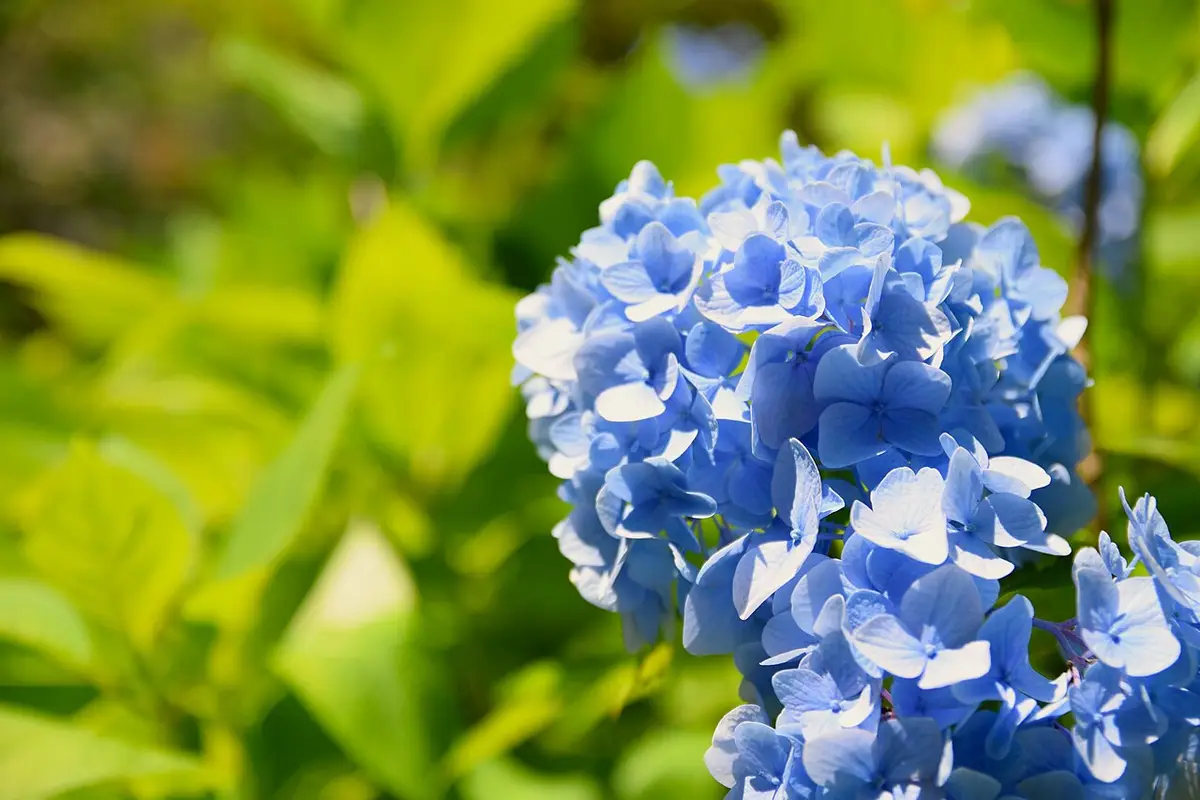
The hydrangeas are not old. They were planted along the approach after the Second World War, in place of the posts that would normally edge the path, and have since made Meigetsu-in Kamakura’s best-known hydrangea temple. Today about 2,500 shrubs fill both sides of the stone steps and the paths beyond, and the shade of blue they share is known as “Meigetsu-in blue”.
The window for 2027 is the first-bloom date of the Japan Meteorological Agency’s reference hydrangea in Yokohama. These are Yokohama observatory dates, not dates measured at the temple.
The 2027 median is June 11, likely between June 5 and June 19. First bloom is not peak, and Meigetsu-in often runs ahead of the reference shrub. In 2026 the Yokohama shrub opened on May 28, the earliest date in 20 years; the tourism association reported Meigetsu-in’s hydrangeas at their best that same day, expected another ten days of peak, and on June 11 described the temple at full peak. For a mid-June trip you are on safe ground. For the first week of June, Meigetsu-in is a better bet than the larger Western hydrangeas at Hasedera.
After the season the temple prunes the shrubs and closes while it does so. If you come in the first days of July, check the tourism association page first.
The hydrangea season guide compares Meigetsu-in with Hasedera, Engakuji, Tokeiji and the Enoden-side gardens and gives a route for a weekday and a weekend. The bloom calendar shows the hydrangea window next to the other seasons, and best time to visit covers June’s weather.
When to arrive, and the queue
Everyone enters through the same gate and climbs the same narrow approach, so the hydrangea season at Meigetsu-in is really a question of timing.
- Be there at opening. In June the gate opened at 8:30 in 2026, half an hour earlier than usual. From Tokyo Station the JR Yokosuka Line reaches Kita-Kamakura in 53 minutes, so a train leaving Tokyo Station before about 7:30 puts you at the gate as it opens. Check your train on JR East’s route search. A private day from Tokyo is timed for the 8:30 June opening and includes Meigetsu-in and Hasedera entry.
- Choose a weekday. June is one of Kamakura’s busiest months (the city counted 1,676,678 visits in June 2025, second only to January), and weekends and Japanese holidays add day-trippers from Tokyo.
- Use the rear garden on a crowded day. On June 11, 2026, at full peak, the tourism association described the rear garden as comparatively quiet, with Meigetsu-in-blue hydrangeas and irises in bloom. The extra ¥500 buys space as well as a second garden.
- Watch the live map. The city’s crowd map shows how busy Kita-Kamakura and other areas are in real time.
- Late afternoon is the other option. June hours ran until 17:00 with last entry at 16:30, so you can also come at the end of a day that started at Hasedera.
What to see inside
The round window
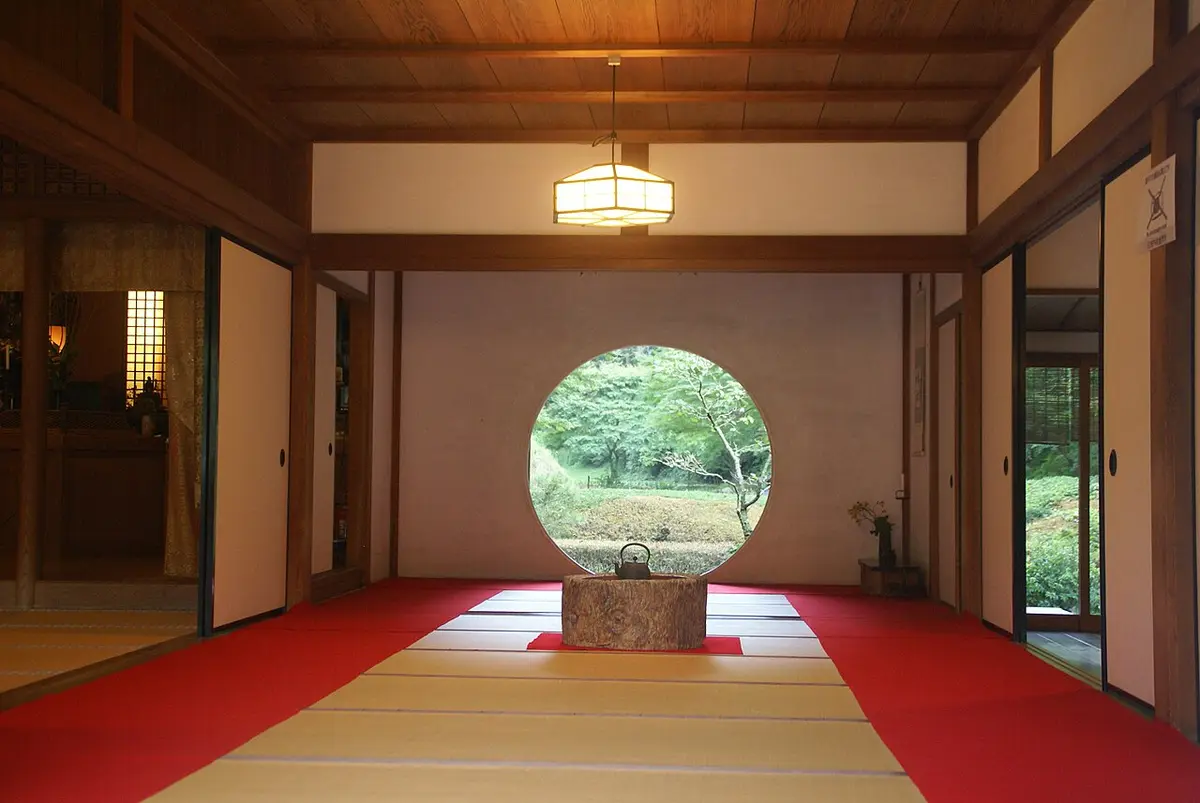
The round window in the main hall is Meigetsu-in’s other famous view. Known as the Satori no Mado, or Window of Enlightenment, it frames the rear garden like a round picture, and its view changes with the season: green in summer, red and gold in late autumn. You see it from inside the hall with normal admission, and the tourism association confirmed it stays viewable through hydrangea season.
The rear garden
The garden behind the main hall is normally closed. It opens twice a year: when the irises flower in June, and in the autumn-colour season. Entry costs ¥500 on top of admission. The temple does not publish fixed dates in advance; in June 2026 the tourism association listed the special opening as running with the period still to be confirmed. JNTO describes the garden as open in June and in late November for the autumn leaves. For 2027, plan on June and late November and check the tourism association page the week before.
The raked-sand garden
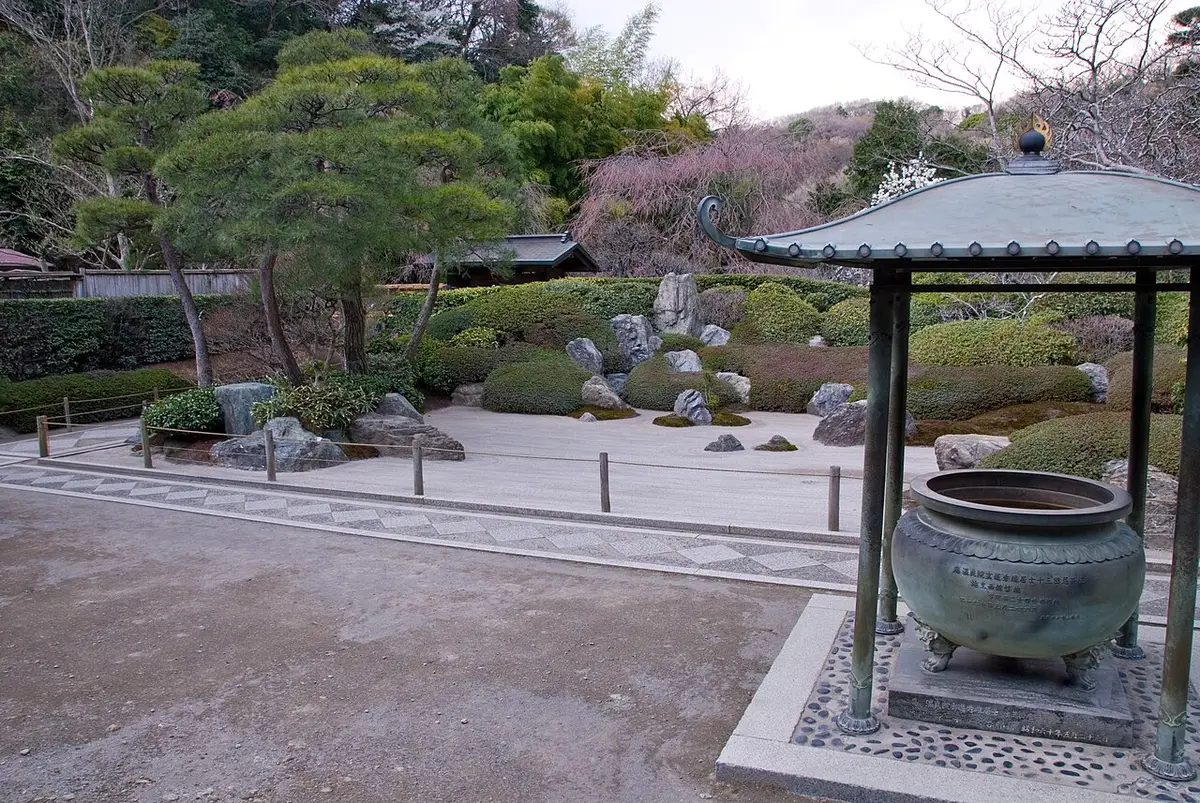
In front of the buildings is a karesansui garden of raked sand, rocks and plants that represents Mount Shumi, the mountain at the centre of the Buddhist world. It is easy to walk past on the way to the window; give it a minute.
Meigetsu-in yagura and the Ten Wells
At the back of the grounds is a yagura, a tomb cut into the hillside, said to be the largest in Kamakura. Its walls carry relief carvings of Buddhas, and the small stone tower inside is said to be Uesugi Norikata’s grave. Near it is the Kame-no-i, one of Kamakura’s Ten Wells and still usable. The grounds also hold a grave attributed to the regent Hojo Tokiyori. The temple’s wooden seated statue of Uesugi Shigefusa, founder of the Uesugi family, is an Important Cultural Property.
Meigetsu-in or Hasedera?
If you only have time for one hydrangea temple, the choice comes down to what you want from the morning.
| Meigetsu-in | Hasedera | |
|---|---|---|
| Where | Kita-Kamakura, 10 min walk from the JR station | Hase, 5 min walk from the Enoden station |
| Hydrangeas | about 2,500, mostly one blue, along a narrow approach | more than 40 varieties, about 2,500 plants, on a hillside path |
| Extra ticket in season | none for the approach; ¥500 for the rear garden | ¥500 hydrangea ticket with a 60-minute entry window |
| Opening in June | 8:30 (2026) | 8:00 |
| Also there | round window, raked-sand garden, yagura | Kannon hall, Benten-kutsu cave, view over the bay |
Meigetsu-in is the more concentrated experience and needs no booking; Hasedera has the variety, the sea view and a booking system that spreads people out. Many visitors do both: one at opening time, the other with a booked window, as in the routes on the hydrangea page. Hasedera sits next to the Great Buddha, so it pairs naturally with Hase; Meigetsu-in pairs with the Zen temples of Kita-Kamakura and the walk down to the town centre.
Meigetsu-in in autumn
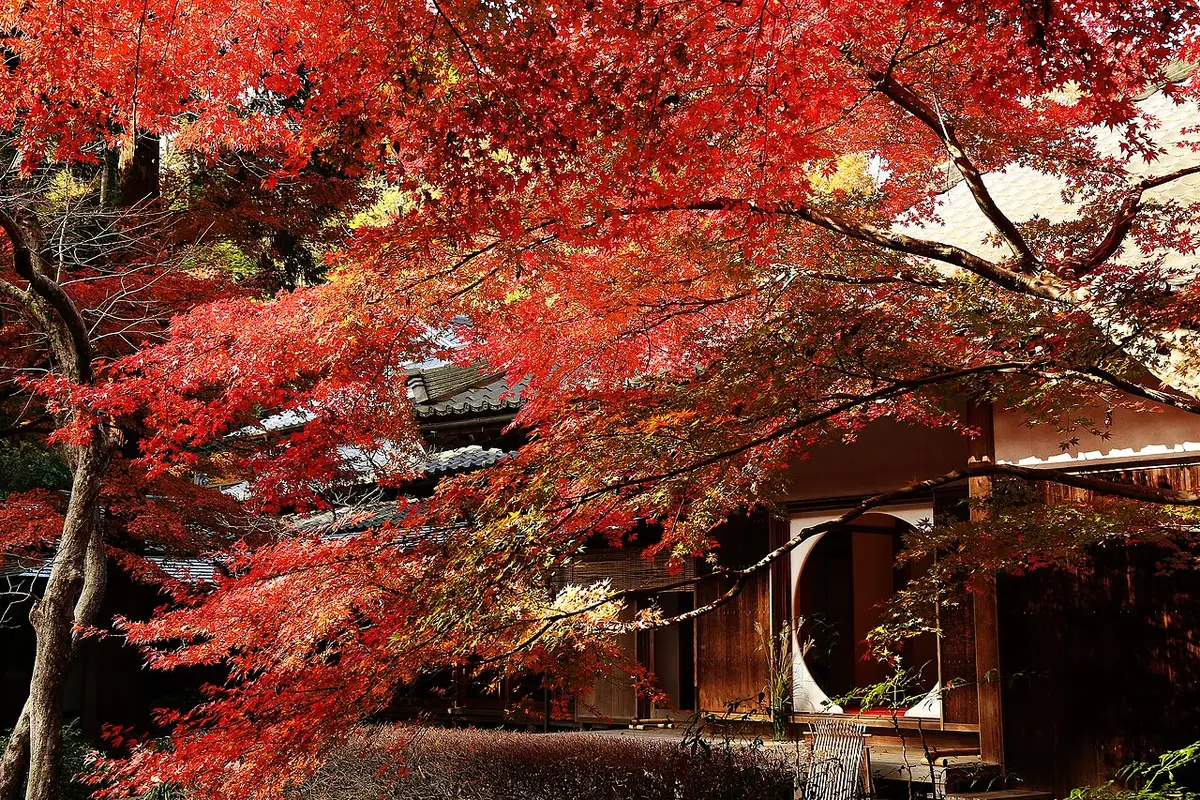
The second good season is late autumn, when the maples behind the round window turn and the rear garden opens again. The tourism association puts Kamakura’s autumn peak in late November to early December and notes that colour starts around Kita-Kamakura Station. The JMA records for Yokohama put maple colouring later, most likely around December 19. The autumn leaves guide has the dated window and the best spots, and Kamakura in winter covers December and New Year. The Kita-Kamakura Zen temples and autumn colors walk includes Meigetsu-in with Engakuji, Jochiji and Kenchoji in about three hours.
Getting there and what to combine it with
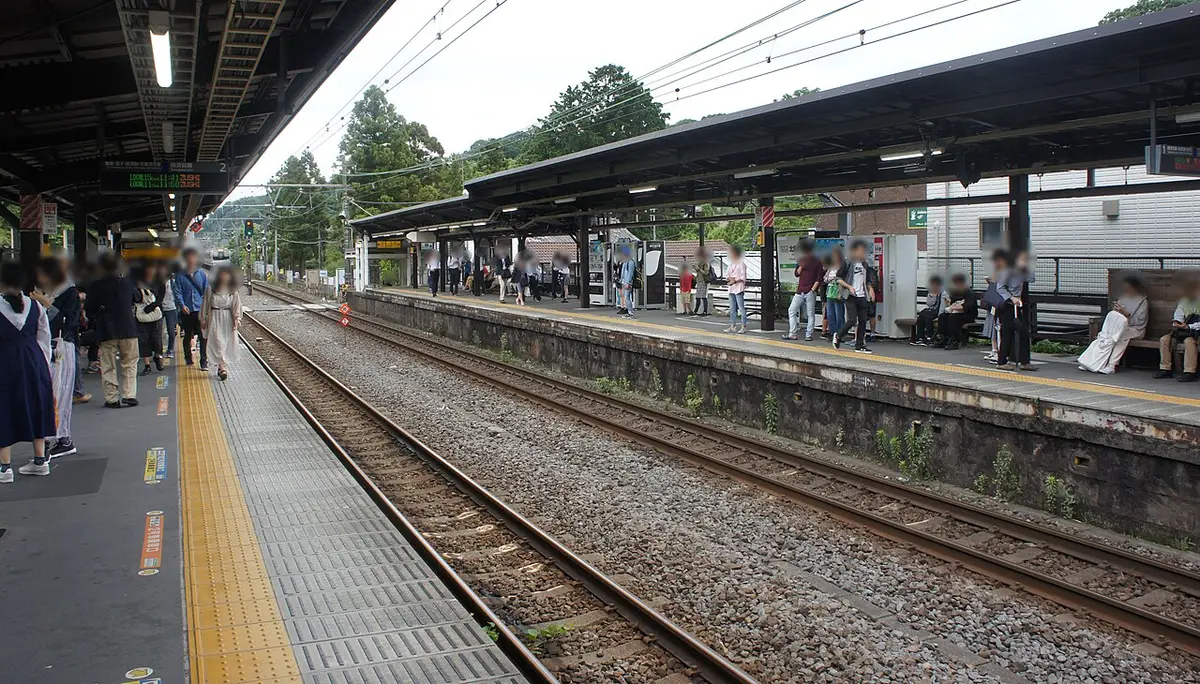
By train. Kita-Kamakura is one stop north of Kamakura on the JR Yokosuka Line: 53 minutes and ¥902 from Tokyo Station, 3 minutes and ¥155 from Kamakura. From the station, walk toward Kamakura on the left side of the tracks and follow the signs into a side street on the left; the tourism association gives 10 minutes. On foot from Kamakura Station it is about 33 minutes. The how to get to Kamakura guide covers trains from Shinjuku, Shinagawa, Yokohama and the airports.
Nearby, in walking order.
- Engakuji, opposite the station, ¥500, 8:30 to 16:30. About 12 minutes on foot from Meigetsu-in.
- Tokeiji, free, 9:00 to 16:00, no photography in the grounds. About 12 minutes on foot.
- Jochiji, ¥300, with bamboo and yama-ajisai in June, about 9 minutes on foot from the station.
- Kenchoji, ¥500, the head temple of Meigetsu-in’s branch. About 16 minutes on foot, on the way to Tsurugaoka Hachimangu.
The Kita-Kamakura guide links them into one walk, the Kamakura map shows the distances, and the day planner builds a timed version for your date. The Kamakura itinerary fits Meigetsu-in into a full day with Hase and the Great Buddha. From Kenchoji it is a downhill walk to Tsurugaoka Hachimangu and Komachi-dori, where the food guide picks up. Hokokuji’s bamboo garden is on the far east side of town, a bus ride from Kamakura Station. For everything else in town, see things to do in Kamakura.
Cost. Meigetsu-in plus Engakuji and the rear garden is ¥1,500 per adult, plus the JR fare. The trip cost calculator adds trains and food for your group.
Staying nearby. For an 8:30 start without an early train, Kita-Kamakura 520 is beside Kita-Kamakura Station. The where to stay guide compares Kita-Kamakura with the station area and Hase.
Questions people ask
How much is Meigetsu-in's entrance fee?
Admission is ¥500 for high school students and adults and ¥300 for elementary and junior high school students. The rear garden behind the main hall, open only in the iris and autumn-colour seasons, costs another ¥500. Visitors with a disability certificate enter free, with one companion.
What are Meigetsu-in's opening hours?
Normally 9:00 to 16:00. In June the temple opens longer for the hydrangeas: in 2026 it was 8:30 to 17:00 with last entry at 16:30, from June 1 to June 30. The temple closes while it prunes the hydrangeas after the season, on dates it sets each year.
When do Meigetsu-in's hydrangeas peak?
Usually in the first half to the middle of June. In 2026 the tourism association reported them at their best on May 28 and at full peak on June 11. The Yokohama observatory's first hydrangea bloom for 2027 is most likely around June 11, within June 5 to June 19.
Can you see the round window at Meigetsu-in?
Yes. The round window in the main hall is viewable with normal admission, including during hydrangea season. It looks out onto the rear garden. To walk in that garden you need the extra ¥500 ticket, sold only while the garden is open in June and in the autumn-colour season.
How do you get to Meigetsu-in?
Take the JR Yokosuka Line to Kita-Kamakura (53 minutes and ¥902 from Tokyo Station, 3 minutes and ¥155 from Kamakura) and walk about 10 minutes toward Kamakura on the left side of the tracks, following the signs. Walking all the way from Kamakura Station takes about 33 minutes.
Read next


Sources (11)
- Kamakura City Tourism Association: Meigetsu-in (fees, hours, history)
- Kamakura City Tourism Association: 2026 hydrangea reports and June hours
- Kamakura City Tourism Association: autumn leaves
- Japan National Tourism Organization: Meigetsuin
- Wikipedia (Japanese): Meigetsu-in, round window and hydrangea history
- Japan Meteorological Agency: phenology records (Yokohama)
- Engakuji (official): hours and fees
- Tokeiji (official)
- Kenchoji (official): access and fees
- JR East Real-Time Route Search
- OpenStreetMap walking routes (OSRM foot profile)