Seasons
Best time to visit Kamakura, month by month
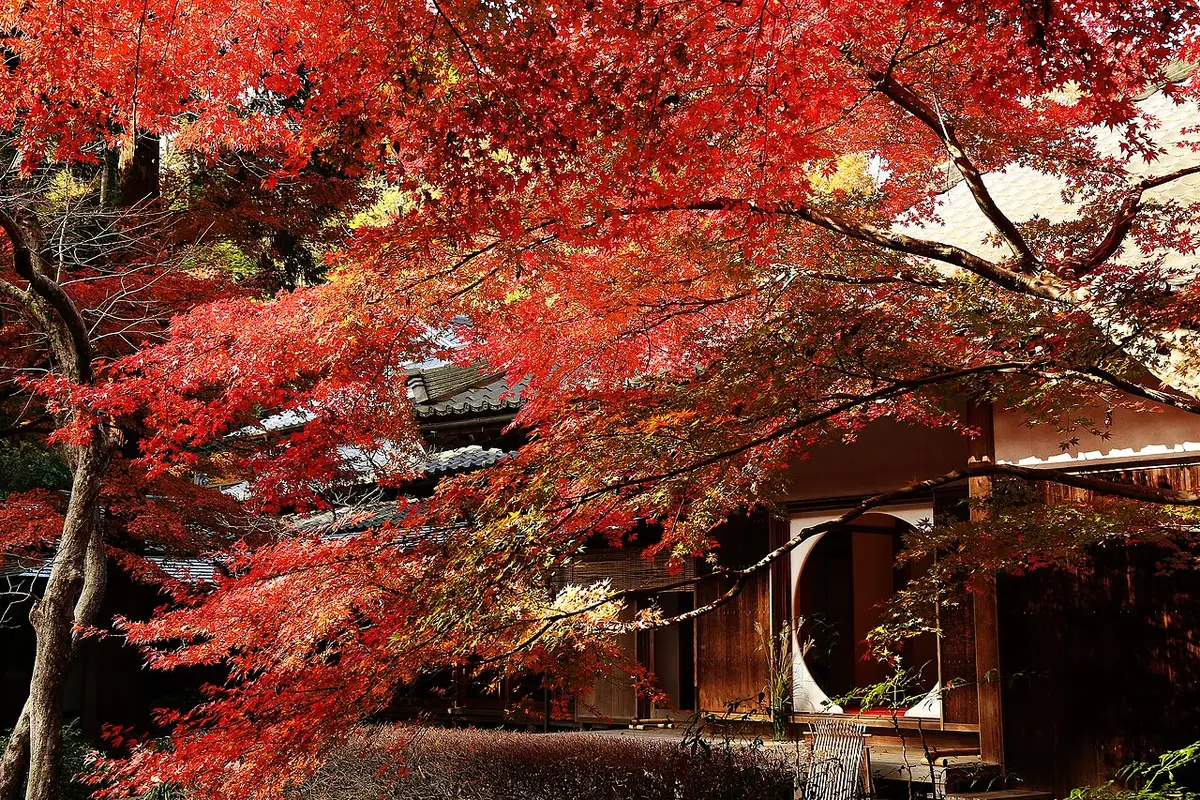
Table of contents
- Kamakura month by month
- How the bloom dates work
- Spring in Kamakura: plum, cherry and Golden Week
- Summer in Kamakura: hydrangeas, rain and beaches
- Autumn in Kamakura: the long, late season
- Winter in Kamakura: New Year, plum and Fuji
- Crowds: which days to avoid
- Weather: what to pack each season
- Events worth timing a trip around
- Opening hours change with the seasons
- A plan for rainy days
- Enoshima through the year
- Our pick by type of trip
The best time to visit Kamakura is early December if you want color without the worst crowds, late March to early April for cherry blossoms, and the first three weeks of June for hydrangeas, which is also the busiest month of the year after New Year. For the fewest people, go on a weekday in December or September. Avoid January 1 to 3, Golden Week and June weekends unless crowds are part of the fun.
Below is every month in one table (what blooms or turns, how busy it gets, and the weather), then one section per season with the 2027 bloom and leaf windows, the holidays that fill the trains, and the events worth timing a trip around.
Kamakura month by month
Weather figures are the Japan Meteorological Agency’s 1991 to 2020 normals for the Yokohama observatory, the closest full weather station to Kamakura. “Rain days” are days with at least 1 mm of rain. The crowd level follows the City of Kamakura’s 2025 monthly visitor count, which counts visits to sights, so one person seeing three temples counts three times.
| Month | What blooms or turns | Crowds (2025 visits) | High / low | Rain, rain days |
|---|---|---|---|---|
| January | Plum starts late in the month; winter peonies at Tsurugaoka | Highest of the year, driven by New Year (3.53 million) | 10°C / 3°C (50°F / 37°F) | 65 mm, 5 days |
| February | Plum at its best; camellias | Low (1.13 million) | 11°C / 3°C (51°F / 38°F) | 65 mm, 5 days |
| March | Plum ends; cherry opens in the last week | Moderate (1.29 million) | 14°C / 6°C (57°F / 43°F) | 140 mm, 10 days |
| April | Cherry full bloom in the first week; azaleas | Moderate, busy on the Kamakura Matsuri weekend (1.10 million) | 19°C / 11°C (66°F / 51°F) | 143 mm, 10 days |
| May | Fresh green; first hydrangeas at the end of the month | Busy in Golden Week (1.35 million) | 23°C / 16°C (74°F / 60°F) | 153 mm, 10 days |
| June | Hydrangeas everywhere | Very busy, worst on weekends (1.68 million) | 26°C / 19°C (78°F / 66°F) | 189 mm, 12 days |
| July | Lotus on the Genpei ponds; beaches open | Moderate (0.96 million) | 29°C / 23°C (85°F / 73°F) | 183 mm, 10 days |
| August | Lotus; beach season | Moderate in town, busy on the coast (1.01 million) | 31°C / 24°C (88°F / 76°F) | 139 mm, 8 days |
| September | Bush clover; yabusame on September 16 | Lowest of the year (0.81 million) | 27°C / 21°C (81°F / 70°F) | 242 mm, 12 days |
| October | Early autumn; Takigi Noh at Kamakura-gu | Moderate (1.09 million) | 22°C / 16°C (72°F / 60°F) | 240 mm, 11 days |
| November | Color starts around Kita-Kamakura early in the month | Busy (1.27 million) | 17°C / 10°C (63°F / 50°F) | 108 mm, 8 days |
| December | Ginkgo and maple peak in the first half | Low (0.82 million) | 13°C / 5°C (54°F / 41°F) | 66 mm, 6 days |
Three things stand out. January’s huge number is swollen by New Year shrine visits. June beats every month except January because of hydrangeas, even though it is the rainy season. And December, with its leaves at their best, is one of the three quietest months of the year.
How the bloom dates work
The bloom and leaf dates on this site are for the Japan Meteorological Agency’s observation trees at the Yokohama observatory, the nearest official record to Kamakura, kept every year since 1953. The most likely 2027 date is the median of recent years, shown with the range most years fell into and the earliest and latest recent dates. These are Yokohama dates, not Kamakura peak dates, so treat them as a guide and follow local bloom reports as the day gets close.
The full method, the year-by-year record and how well past windows held up are on the calendar page. The short version: windows cover most years, but an unusually warm spring or autumn can push dates outside them, so check again two weeks before you travel.
Spring in Kamakura: plum, cherry and Golden Week
Spring runs from the plum blossoms of February to the fresh green of May. It is the season with the most variety and the most holiday traffic.
March: the last plums and the first cherries
Early March is the tail of plum season and the quietest stretch of spring. Days warm to about 14°C (57°F), but March is also when the rain picks up: about 140 mm over ten wet days in an average year at Yokohama.
The Somei-yoshino cherries open in the last third of the month.
The Vernal Equinox falls on Sunday, March 21, 2027, with a substitute holiday on Monday, March 22. That long weekend can coincide with the first cherry blossoms, so expect full trains and a crowded Dankazura.
Early April: cherry full bloom
Full bloom usually lands around the turn of the month.
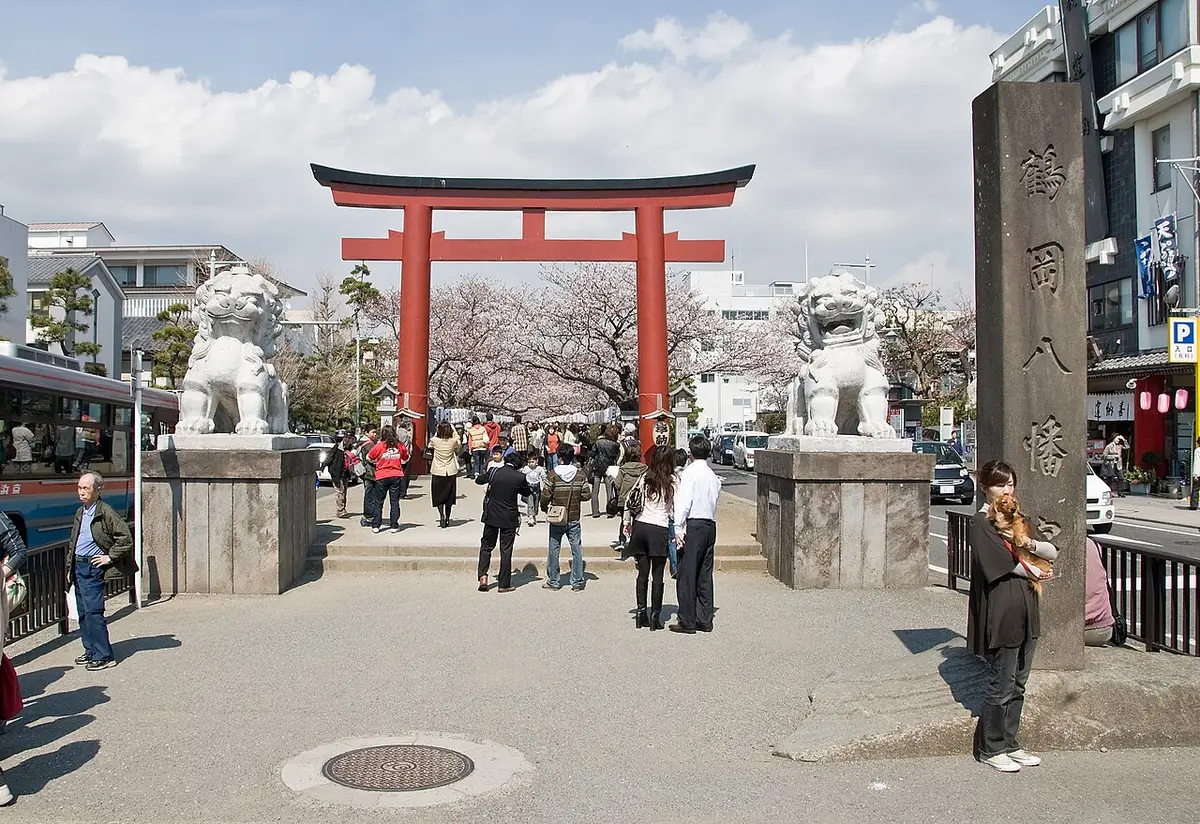
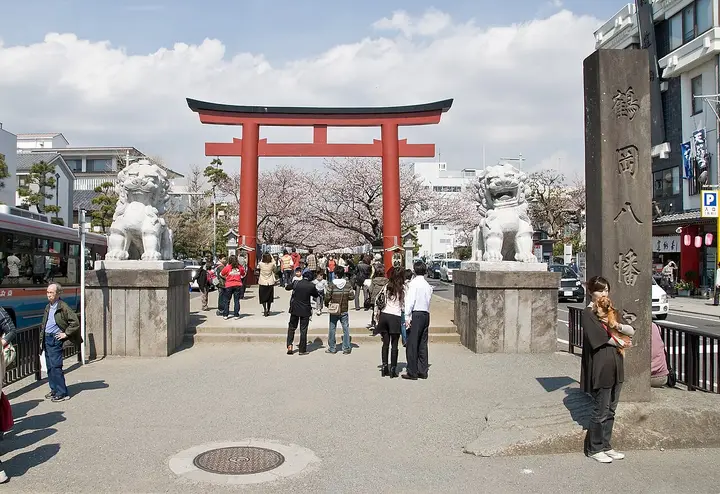
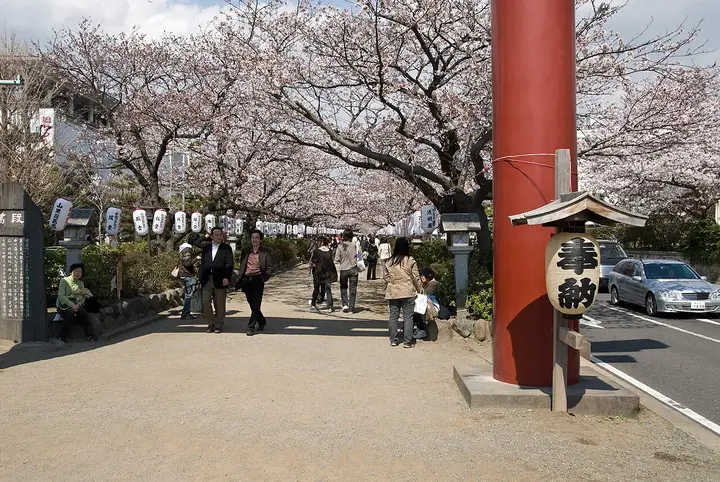
The two classic cherry spots are the Dankazura, the raised path down the middle of Wakamiya-oji avenue, and the Genpei ponds inside Tsurugaoka Hachimangu, ringed by cherries in spring. Genjiyama Park, Kamakura-gu, Engakuji and Kenchoji follow. The cherry blossom guide covers each spot, how to time it and which ones are free.
From the second Sunday to the third Sunday of April, the Kamakura Matsuri fills Tsurugaoka with a procession and the Shizuka no mai dance; in 2026 it ran April 12 to 19 (tourism association). Expect the shrine and Wakamiya-oji to be packed on those two Sundays.
If you want a guide for cherry day, the Kamakura cherry blossom full-day tour walks the main spots with a local expert, entry tickets and a bento lunch included per the listing.
Golden Week: the holiday wall
Golden Week is a cluster of national holidays at the turn of April and May. In 2027 they fall on Thursday, April 29 and Monday, May 3 to Wednesday, May 5, so Saturday May 1 to Wednesday May 5 is one five-day stretch off for much of Japan. Trains from Tokyo, the Enoden and Enoshima are at their fullest. Fujisawa City counted 494,000 visits to the Katase-Enoshima area in Golden Week 2025 alone.
If your trip falls in that week, go to Kita-Kamakura first thing, skip Hase until late afternoon, and leave Enoshima for another day. Friday, April 30 is a normal working day in 2027.
May: green and comfortable
After Golden Week, May is one of the most pleasant months: highs around 23°C (74°F), long days and new leaves in every valley. It is a good month for the hiking trails, before the humidity of June. A guided hidden trails day hike follows the Daibutsu trail with a licensed local guide. The first lacecap hydrangeas appear at the end of the month.
Summer in Kamakura: hydrangeas, rain and beaches
Summer starts with Kamakura’s most famous flower show and ends on the beach. In between come the rainy season and real heat.
June: hydrangea month
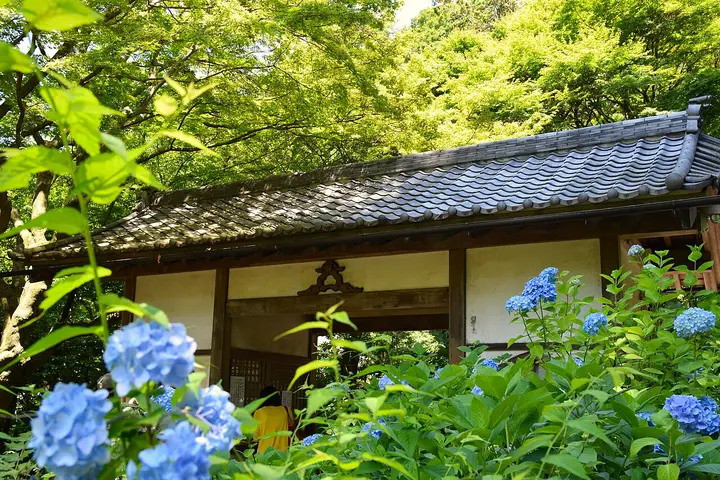
June is the busiest month of the year after January: 1.68 million visits in 2025. The draw is hydrangea season at Meigetsu-in, Hasedera and a dozen smaller temples. The Kamakura tourism association says the small mountain and lacecap hydrangeas start in late May and the big Western hydrangeas peak from early to late June. At Yokohama, JMA only records first bloom:
The rainy season overlaps almost exactly. JMA’s normal for the Kanto-Koshin region is June 7 to July 19; in 2026 it began on June 7. June is the cloudiest month at Yokohama, with about 136 hours of sunshine and twelve rain days. Hydrangeas look their best in soft rain, so a wet weekday is often the best hydrangea day you can get.
Hasedera’s hydrangea path has used timed, booked tickets in recent seasons, and Meigetsu-in extends its hours in June. The hydrangea guide has the 2027 window, the ticket rules and the order to visit temples. If you go on a weekend, start at 8:00 and pick one area, not both. A one-day flower viewing tour from Tokyo visits Meigetsu-in and Hasedera; the Hasedera hydrangea path ticket is not included.
July and August: heat and the coast
Rainy season ends around mid-July. After that, Kamakura is hot: Yokohama averages about 16 days at 30°C or more in July and 22 in August, and nights stay around 23 to 24°C (73 to 76°F). VISIT KAMAKURA advises sightseeing in the morning, ducking into museums at midday and eating by the sea in the evening.
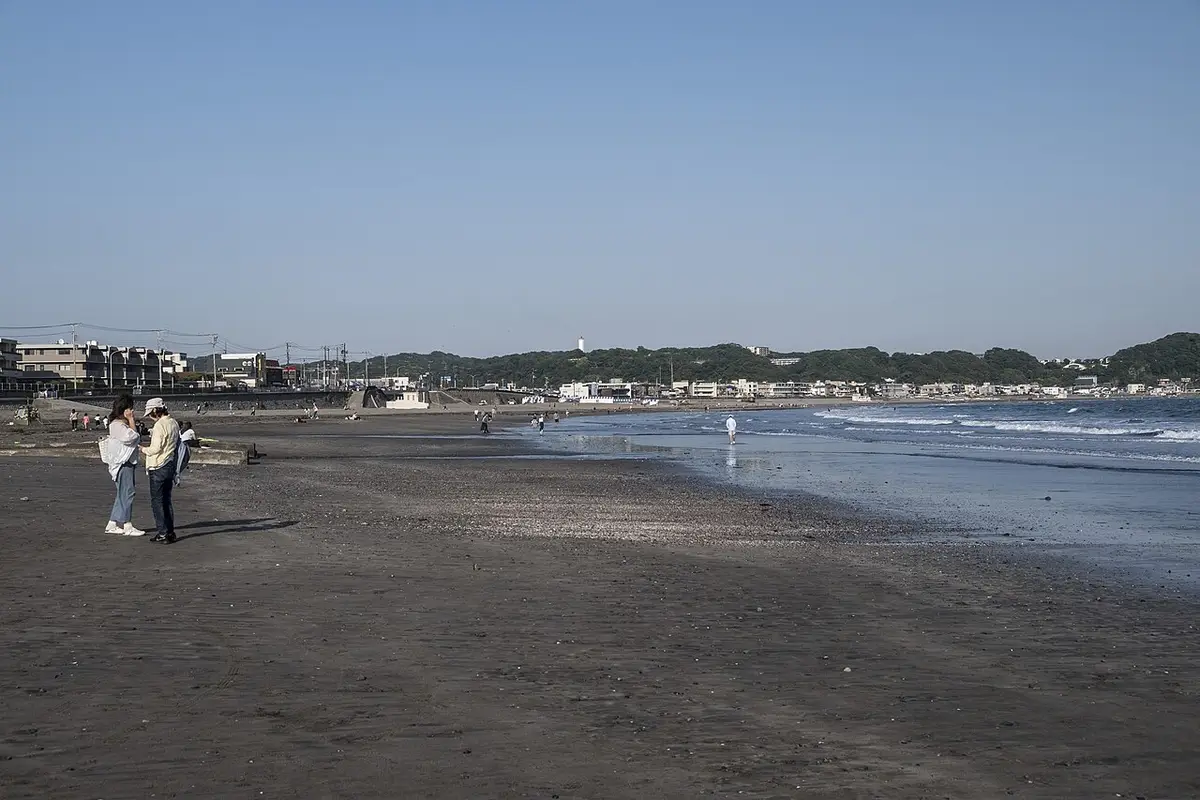
Kamakura’s beaches officially open from July 1 to August 31, with seasonal beach huts (umi no ie). Fujisawa City, which includes Enoshima, counted 3.53 million visits in August 2025, its peak month, while Kamakura’s count stayed near a million a month. In other words, summer crowds go to the sand, and the temples are calmer than in June. To stay by the sand, WeBase KAMAKURA is in Yuigahama.
Two summer events: the Kamakura Fireworks Festival in July (in 2026 it was held on July 10, at a reduced scale), and the Bonbori Matsuri at Tsurugaoka, three or four evenings in early August when about 400 lanterns with calligraphy and paintings by artists and public figures line the paths. The Genpei ponds bloom with red and white lotus in summer.
Holidays: Marine Day falls on Monday, July 19, 2027 and Mountain Day on Wednesday, August 11.
Autumn in Kamakura: the long, late season
Kamakura’s autumn starts slowly. September still feels like summer, and, according to the Kamakura tourism association, the leaves turn later here than in most other regions.
September: the quiet month
September had the fewest visits of 2025: 807,512. That is partly because it is the wettest month at Yokohama, with about 242 mm of rain and typhoon season at its height, and partly because highs still reach 27°C (81°F). On a dry weekday, though, you will have the temples close to yourself.
On September 16, Tsurugaoka Hachimangu holds yabusame, mounted archery, on the riding ground that crosses the shrine grounds. The Respect for the Aged Day (Monday, September 20, 2027) and the Autumnal Equinox (Thursday, September 23) bring a short burst of holiday traffic.
October: festivals and the first cool days
October is still wet (about 240 mm) but cools to highs of 22°C (72°F). On a fall evening, Kamakura-gu stages the Kamakura Takigi Noh, torchlit Noh theater held every year since 1959; in 2026 it was on October 9, and every seat had sold out by late September. Sports Day falls on Monday, October 11, 2027.
November: the leaves begin
The tourism association says color starts around Kita-Kamakura Station in early November and peaks across Kamakura from late November to early December. November drew 1.27 million visits in 2025, about as many as March. Culture Day (Wednesday, November 3, 2027) and Labor Thanksgiving Day (Tuesday, November 23, 2027) are the busiest dates; in 2026, November 23 falls on a Monday and makes a three-day weekend. The Kita-Kamakura Zen temples and autumn colors walk covers Engakuji, Meigetsu-in, Jochiji and Kenchoji in about three hours.
From November 21 to December 6, 2026, Hasedera opens its gardens after dark for its autumn night viewing, sunset to 19:00, for the normal ¥400 fee. In 2025 it ran from November 22 to December 7.
December: peak color, smaller crowds
This is where the official observations disagree with most travel advice. At the Yokohama observatory, the ginkgo turns yellow around early December and the maple turns red around December 19, later than the “mid-November” many guides give.
Put that together with the tourism association’s late-November-to-early-December peak, and the first ten days of December are the safest bet for color at the big temples. Maples in sheltered valleys often hold into the middle of the month. December is also dry (66 mm, six rain days) and quiet. The autumn leaves guide lists the spots in order of color and gives each one’s fee and hours.
A guided walk helps if you want the history with the leaves: the City of Samurai walking tour runs about three and a half hours in small English-speaking groups.
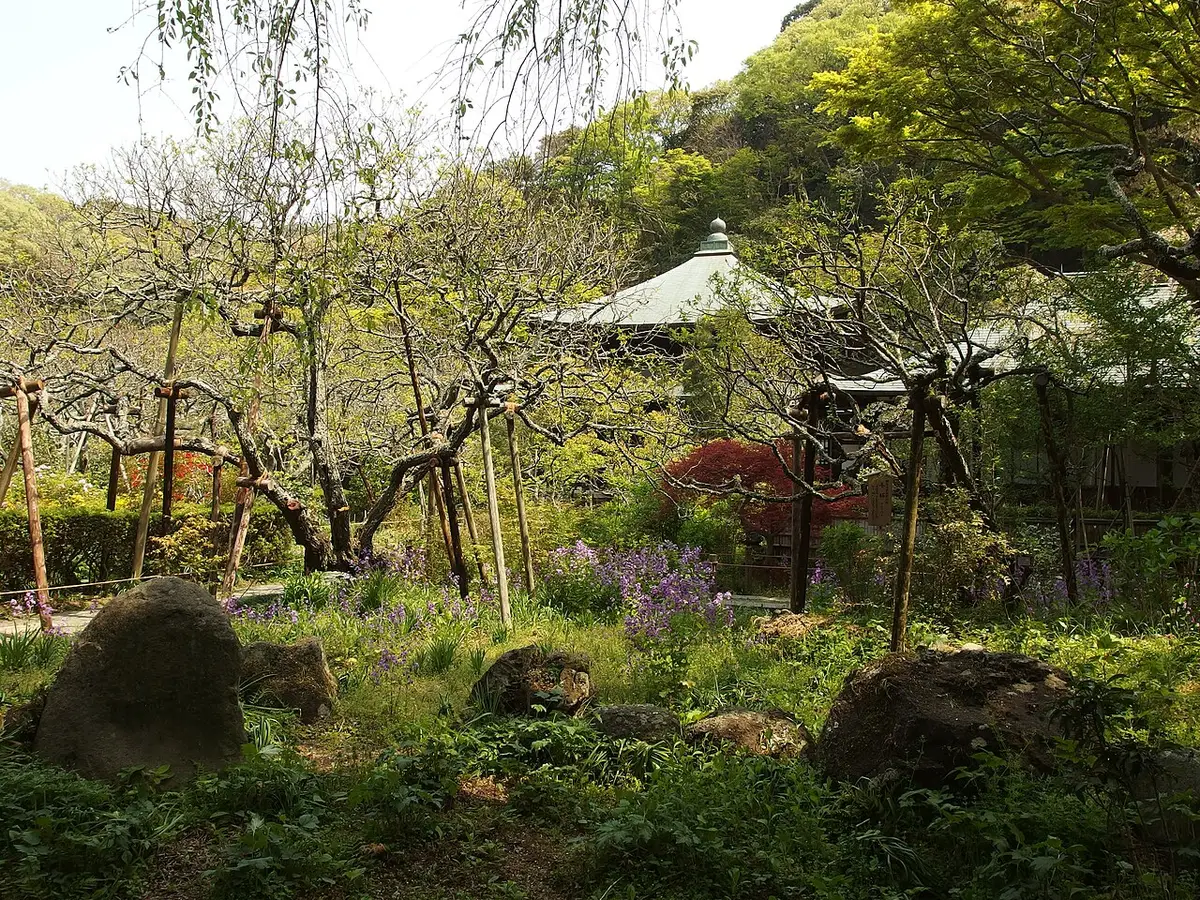
Winter in Kamakura: New Year, plum and Fuji
Winter is the clearest and, after the first week of January, one of the quietest seasons. The tourism association puts December at around 10°C and January and February at around 7°C, and daytime temperatures rarely fall below freezing.
New Year: Kamakura’s busiest days
January’s 3.53 million visits are driven by hatsumode, the year’s first shrine visit, and its focus is Tsurugaoka Hachimangu, which counted 6.6 million visits over 2025 as a whole. For New Year 2026 the shrine stayed open around the clock from December 31 to January 3, then 0:00 to 20:00 on January 4 and its normal 6:00 to 20:00 from January 5. Police and guards may hold the crowd back in sections, and you cannot carry a stroller up the great stone steps when it is busy.
The City of Kamakura closes the roads around Kamakura Station to traffic from 23:00 on December 31 to 17:00 on January 1, and from 9:00 to 17:00 on January 2 and 3. Come by train. The Kamakura in winter guide explains the New Year rites, the Hasedera bell and how to avoid the queues.
From January 1 to mid-February, the shrine’s Shinen peony garden by the Genji pond shows its winter peonies for a ¥500 fee. Coming of Age Day is Monday, January 11, 2027.
February: plum season
Kamakura’s plums flower in midwinter. At the Yokohama observatory, the ume (plum) first bloom fell on January 13 in 2026 and January 31 in 2025; over the last 20 recorded years the median date was January 30, and the 1991 to 2020 normal is February 1. So most plum gardens are at their best through February. Engakuji, Zuisenji, Kamakura-gu and Hasedera all list plum among their winter flowers.
February is quieter than the cherry and hydrangea months, and it is the driest month with January (65 mm, five rain days). National Foundation Day (Thursday, February 11, 2027) and the Emperor’s Birthday (Tuesday, February 23) are the only holidays.
Clear days and Mt. Fuji
Dry winter air brings Mt. Fuji into view. Yokohama gets about 193 hours of sunshine in January, more than any month except August. The City of Kamakura says that in winter Fuji is often clearly visible behind Enoshima from the observation deck at Inamuragasaki, and the Enoshima Sea Candle lists Fuji among its views. From December 1, 2026 to February 28, 2027, the Shonan no Hoseki illumination lights the Samuel Cocking Garden on Enoshima from 17:00.
For a winter night by the sea, Kamakura Prince Hotel sits on the Shichirigahama shore between Inamuragasaki and Enoshima.
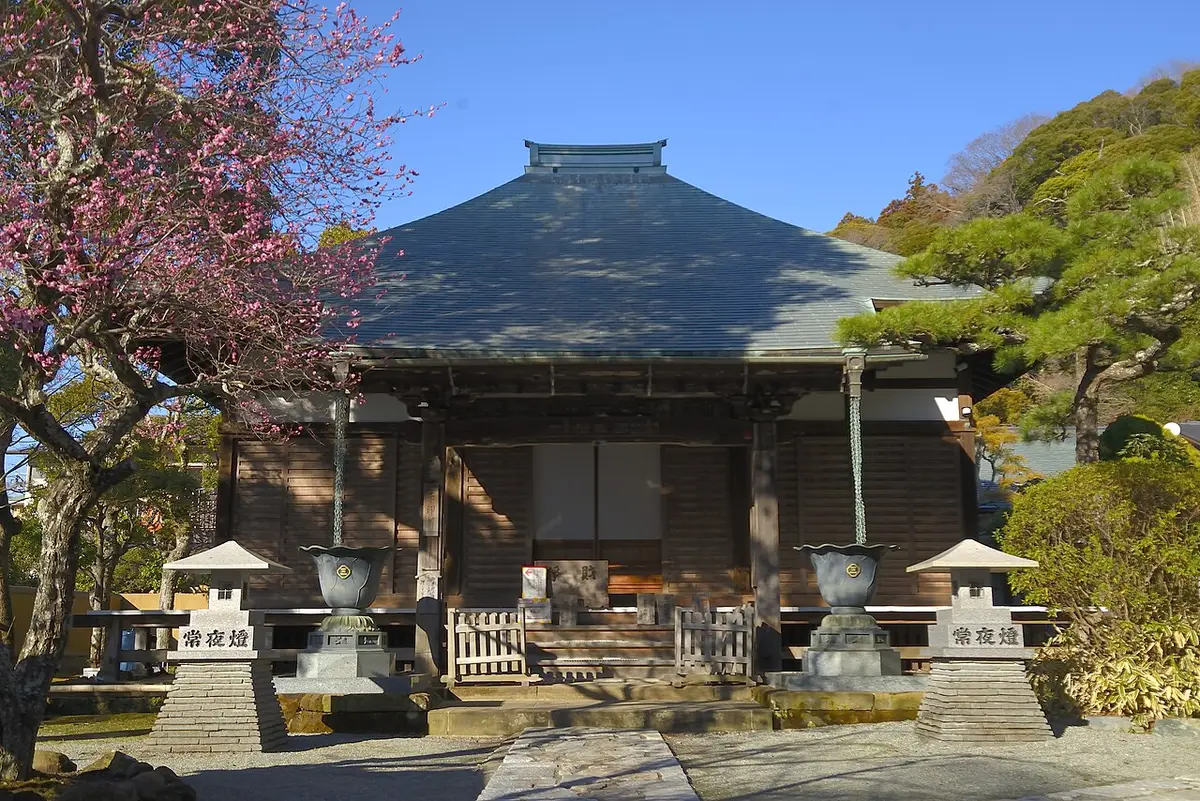
Crowds: which days to avoid
Kamakura’s crowds follow three rhythms: the day of the week, the holiday calendar and the flower calendar. Get two out of three right and you will be fine.
Weekdays beat weekends, every month. Day-trippers from Tokyo come mostly on Saturdays, Sundays and holidays, so moving your visit by a day or two does more than any other trick.
National holidays in 2027 (from the Cabinet Office list):
| Date (2027) | Holiday | Effect in Kamakura |
|---|---|---|
| Fri Jan 1 | New Year’s Day | Peak hatsumode crowds Jan 1 to 3 |
| Mon Jan 11 | Coming of Age Day | Three-day weekend |
| Thu Feb 11 | National Foundation Day | Busy plum day |
| Tue Feb 23 | Emperor’s Birthday | Busy plum day |
| Sun Mar 21 and Mon Mar 22 | Vernal Equinox and substitute holiday | Three-day weekend, often first cherry blossoms |
| Thu Apr 29 | Showa Day | Start of Golden Week |
| Mon May 3 to Wed May 5 | Constitution Day, Greenery Day, Children’s Day | Five days off with the weekend |
| Mon Jul 19 | Marine Day | Three-day weekend, beaches |
| Wed Aug 11 | Mountain Day | Near the Obon week |
| Mon Sep 20 and Thu Sep 23 | Respect for the Aged Day, Autumnal Equinox | Busy week |
| Mon Oct 11 | Sports Day | Three-day weekend |
| Wed Nov 3 | Culture Day | Leaves begin |
| Tue Nov 23 | Labor Thanksgiving Day | Leaves near peak |
Flower weekends are the hardest. The two Saturdays and Sundays around full cherry bloom, every weekend in June and the last weekend of November are the most crowded non-holiday days. In June, Hasedera’s hydrangea path has used timed tickets booked about a week ahead.
What to do about it:
- Be at the first temple when it opens, before most day-trippers arrive. Hasedera opens at 8:00 and Engakuji at 8:30.
- Go against the flow. Most day-trippers start at Kamakura Station and head for Komachi-dori. Start in Kita-Kamakura or Hase instead and reach the center after 15:00.
- Use the city’s quieter route. VISIT KAMAKURA publishes a crowd-free walking route from Kamakura Station over the western hills via Kaizoji and Zeniarai Benzaiten.
- Check the live map. The city runs a crowd map for stations and streets.
- Stay the night. A room in town puts you at the gates before the first trains from Tokyo arrive. Hotel Metropolitan Kamakura is a short walk from Kamakura Station; the where to stay guide compares areas.
Weather: what to pack each season
The tourism association describes Kamakura’s winters as relatively warm, and autumn color lasts into December. Yokohama’s normal year has 1,731 mm of rain, most of it in the wet spells of March to October.
- December to February: a warm coat, gloves and a hat for early starts; lows sit around 3 to 5°C (37 to 41°F), and Yokohama averages only about two frosty nights in January.
- March to May: layers. March can still be chilly in the shaded valleys of Kita-Kamakura, while May afternoons are warm in the sun.
- June to mid-July: an umbrella and shoes that can get wet. Temple steps get slippery in hydrangea season.
- Mid-July to September: sun protection, a hat and water. Walking the hiking trails in this heat is hard work; go early.
- October and November: a light jacket. October is wet, November dry and clear.
Most temples close at 16:00 to 17:00 all year, and Engakuji closes earlier from December to February, at 16:00. Winter days are short, so plan the order of your stops around those times. The itinerary page has timed routes for each season.
Events worth timing a trip around
Kamakura’s festivals are mostly at Tsurugaoka Hachimangu, with a few at temples and on Enoshima. Dates below are the fixed ones from the shrine’s festival calendar and the organizers’ pages; where a date moves each year, the 2026 date is given.
- January 1 to 7: at Tsurugaoka, the Gohan gyoji, in which a sacred seal is pressed to your forehead for health and protection from misfortune. The New Year’s Day rite starts at 5:00.
- January 5: the Jomashinji archery rite at Tsurugaoka, from 10:00. Archers shoot at a target about 156 cm across from 27 m away.
- January 15: the Sagicho bonfire at 7:00 by the Genji pond, where New Year decorations are burned.
- Early February (Setsubun): a bow-string rite and bean throwing at Tsurugaoka.
- Second to third Sunday of April: the Kamakura Matsuri.
- Early April to early June: the Enoshima Art Festival around the Samuel Cocking Garden.
- July: the Kamakura Fireworks Festival (July 10 in 2026).
- Early August: the Bonbori Matsuri lantern festival, from the day before Risshu, the traditional start of autumn, to August 9.
- September 16: yabusame at Tsurugaoka.
- October: the Kamakura Takigi Noh at Kamakura-gu (October 9 in 2026).
- November and December: Hasedera’s autumn night viewing, and evening openings at Hokokuji, which began running about twice a month from November 2026 (November 7 and 21, December 11 and 19 in 2026, 18:00 to 20:00).
- December 1 to February 28: the Shonan no Hoseki illumination on Enoshima.
- December 31: the New Year’s Eve bell at Hasedera; ringing it requires a return-postcard application that arrives by November 30.
Opening hours change with the seasons
Temple hours shift between summer and winter, and winter days are short. Check the hours of your first and last stop before you plan the order of the day.
| Place | Hours | Seasonal change |
|---|---|---|
| Hasedera | 8:00 to 16:30 entry | April to June until 17:00 entry |
| Kotoku-in (Great Buddha) | 8:00 to 17:30 April to September | October to March until 17:00 |
| Engakuji | 8:30 to 16:30 March to November | December to February until 16:00 |
| Kenchoji | 8:30 to 16:30 | all year |
| Meigetsu-in | 9:00 to 16:00 | longer hours in June |
| Hokokuji | 9:00 to 16:00 | evening openings from November 2026 |
| Tsurugaoka Hachimangu | gates 6:00 to 20:00 | open 24 hours December 31 to January 3 |
The pattern matters most in winter and in June. In winter, start early, because Engakuji closes at 16:00 and the light goes soon after. In June, use the extra hour at Hasedera and Meigetsu-in to arrive after the morning rush has moved on, or come at opening.
A plan for rainy days
Yokohama averages about ten rain days a month from March to October, August aside, so it pays to have a wet-weather version of your day. Some sights are better in the rain: hydrangeas in June, the bamboo at Hokokuji, and the quiet of the Kita-Kamakura temples when the crowds stay away. A private Hokokuji bamboo valley tour builds a day around the bamboo grove.
For shelter, the Kamakura Museum of National Treasures inside the Tsurugaoka grounds is open 9:00 to 16:30, and Hasedera has its own Kannon Museum. The Enoden is a dry way to see the coast. Leave the hiking trails for a dry day; sections close after storm damage, as part of the Ten-en trail did for a fallen tree in March 2026.
Enoshima through the year
Enoshima, at the far end of the Enoden, has a different rhythm from Kamakura. Fujisawa City, which includes the island, counted 3.53 million visits in August 2025 against 1.15 million in February: its crowds follow the beaches, not the flowers. In summer the island and Katase beach are at their busiest.
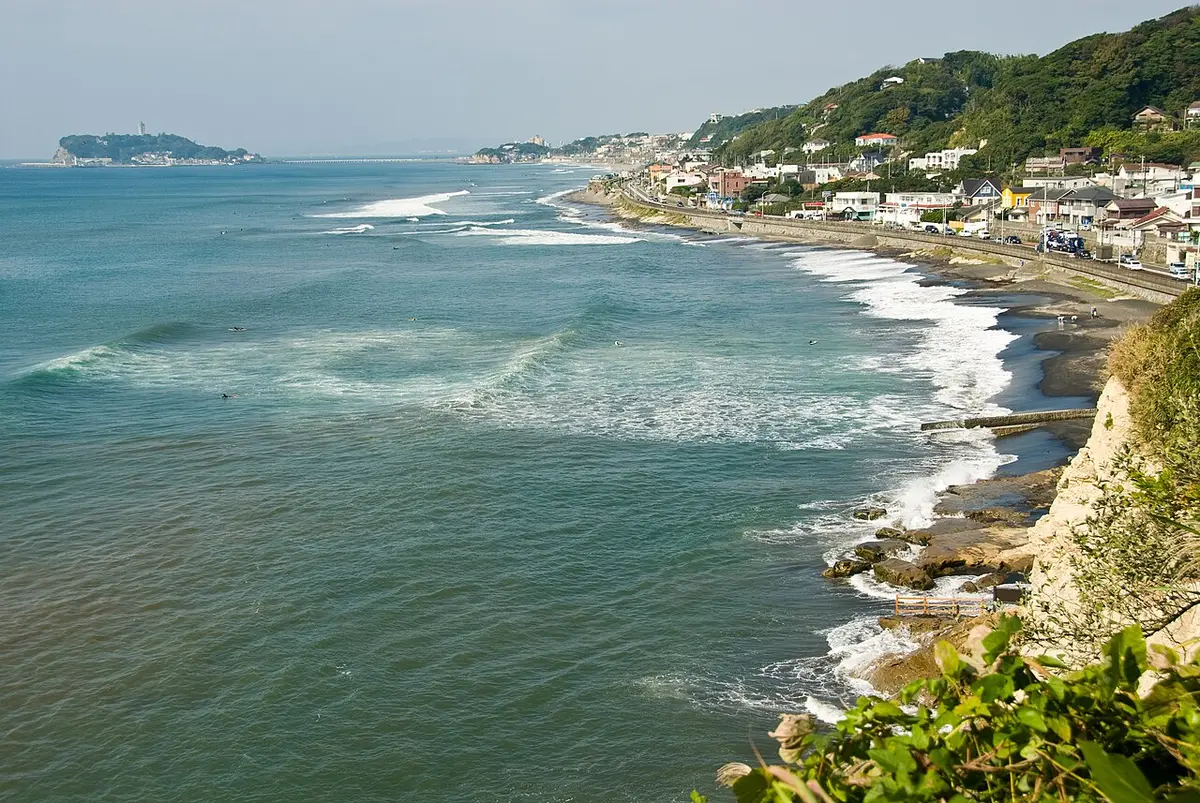
Winter is Enoshima’s best season for views. The Sea Candle’s observation deck, 101.5 m above the sea, looks across Sagami Bay to Mt. Fuji, the Izu Peninsula, Hakone and the Tanzawa mountains, and from December the Shonan no Hoseki lights come on at 17:00 and stay on until 20:00 (21:00 on weekends and holidays). The Enoshima guide has the island route and tickets. The Enoshima Island All-Access Pass bundles the Escar, Sea Candle, Iwaya caves and the aquarium.
Our pick by type of trip
- First visit, one day, flexible dates: a weekday in the first half of December, or a weekday in mid-May.
- Cherry blossoms: a weekday between about March 25 and April 5; check the calendar two weeks out.
- Hydrangeas: a weekday between about June 5 and June 25, early in the morning.
- Autumn color: a weekday between about November 28 and December 10.
- Fewest people: a weekday in September or December.
- Beach and Enoshima: a weekday in July or early September; the Enoshima guide covers the island.
- Family trip: spring or autumn school-term weekdays; the Kamakura with kids page has a slower route.
If you would rather not plan at all, a guided day from Tokyo picks the season’s spots for you. The Kamakura and Enoshima day tour covers Tsurugaoka Hachimangu, Hasedera, the Great Buddha and Enoshima with an English-speaking guide. For a spring or New Year stroll in traditional dress, the kimono experience by Komachi-dori dresses you a minute from the station.
Whatever the season, the trip cost calculator adds up trains and temple fees, and the how to get to Kamakura guide has the trains from Tokyo, Shinjuku and Yokohama.
Questions people ask
What is the best month to visit Kamakura?
Early December is the best single month for most visitors: maples and ginkgo are near their peak, the air is dry and clear, and December had the second-lowest visitor count of 2025. Late March to early April (cherry) and the first half of June (hydrangea) are prettier but much busier. September is the quietest month, but also the wettest.
Is Kamakura busy on weekends?
Yes. Day-trippers from Tokyo fill Komachi-dori, the Enoden and the Hase temples on Saturdays, Sundays and national holidays, above all in June and on long weekends. On a weekday the same route is far calmer. If you can only go on a weekend, be at Hasedera or Engakuji when they open at 8:00 or 8:30.
When is cherry blossom season in Kamakura in 2027?
At the Yokohama observatory, the closest official station, Somei-yoshino cherries most likely open around March 21, 2027 and reach full bloom around March 31. In the last 20 years full bloom fell between March 22 and April 9. Treat these as a guide and follow local bloom reports.
When do the autumn leaves peak in Kamakura?
Later than in Tokyo's mountains. The Kamakura tourism association puts the peak in late November to early December. At the Yokohama observatory the ginkgo turns yellow around December 6 and the maple turns red around December 19 in a typical recent year, so the first half of December is the safest bet.
What is the weather like in Kamakura in winter?
Mild and dry. Yokohama's normal daily high is about 10°C (50°F) in January with lows around 3°C (37°F), and January averages only about five days with rain. Clear winter mornings are the best time of year to see Mt. Fuji from the coast and from Enoshima.
When should I avoid Kamakura?
Avoid January 1 to 3 unless you want the New Year crowds at Tsurugaoka Hachimangu, Golden Week (April 29 and May 1 to 5 in 2027), and June weekends in hydrangea season. July and August are hot and humid, with about 16 and 22 days above 30°C in an average year.
Read next


Sources (34)
- Japan Meteorological Agency: climate normals 1991-2020, Yokohama (temperature, rain, sunshine)
- Japan Meteorological Agency: climate normals, Yokohama (rain days)
- Japan Meteorological Agency: climate normals, Yokohama (hot and frost days)
- Japan Meteorological Agency: rainy season start and end (Kanto-Koshin)
- Japan Meteorological Agency: plant phenology records
- Japan Meteorological Agency: ume first bloom 2025-2026
- Cabinet Office: national holidays 2026-2027
- City of Kamakura: tourism statistics 2025 (monthly visits)
- City of Kamakura: New Year traffic restrictions
- Tsurugaoka Hachimangu (official): New Year 2026 visiting hours
- Tsurugaoka Hachimangu (official): festivals by month
- Tsurugaoka Hachimangu (official): grounds
- Kamakura City Tourism Association: hydrangea season
- Kamakura City Tourism Association: autumn leaves
- Kamakura City Tourism Association: Kamakura Matsuri
- Kamakura City Tourism Association: Kamakura Fireworks Festival
- Kamakura City Tourism Association: Kamakura Takigi Noh
- VISIT KAMAKURA: seasons
- VISIT KAMAKURA: getting around without the crowds
- Hasedera (official): hours and autumn night viewing 2026
- Engakuji (official): visiting hours
- Enoshima Sea Candle (official): Shonan no Hoseki 2026-2027
- Fujisawa City tourism statistics 2025
- Fujisawa City: Golden Week 2025 visitor figures
- Kotoku-in (official): hours
- Kenchoji (official): visiting hours
- Kamakura City Tourism Association: Meigetsu-in
- Hokokuji (official)
- Kamakura City Tourism Association: Hokokuji evening visits
- Hasedera (official): New Year's Eve bell application
- City of Kamakura: Kamakura Kaihin Park (Inamuragasaki)
- Enoshima Sea Candle (official): tower
- Kamakura crowd map
- VISIT KAMAKURA: Ten-en trail closure lifted (March 2026)