Seasons
Kamakura in winter
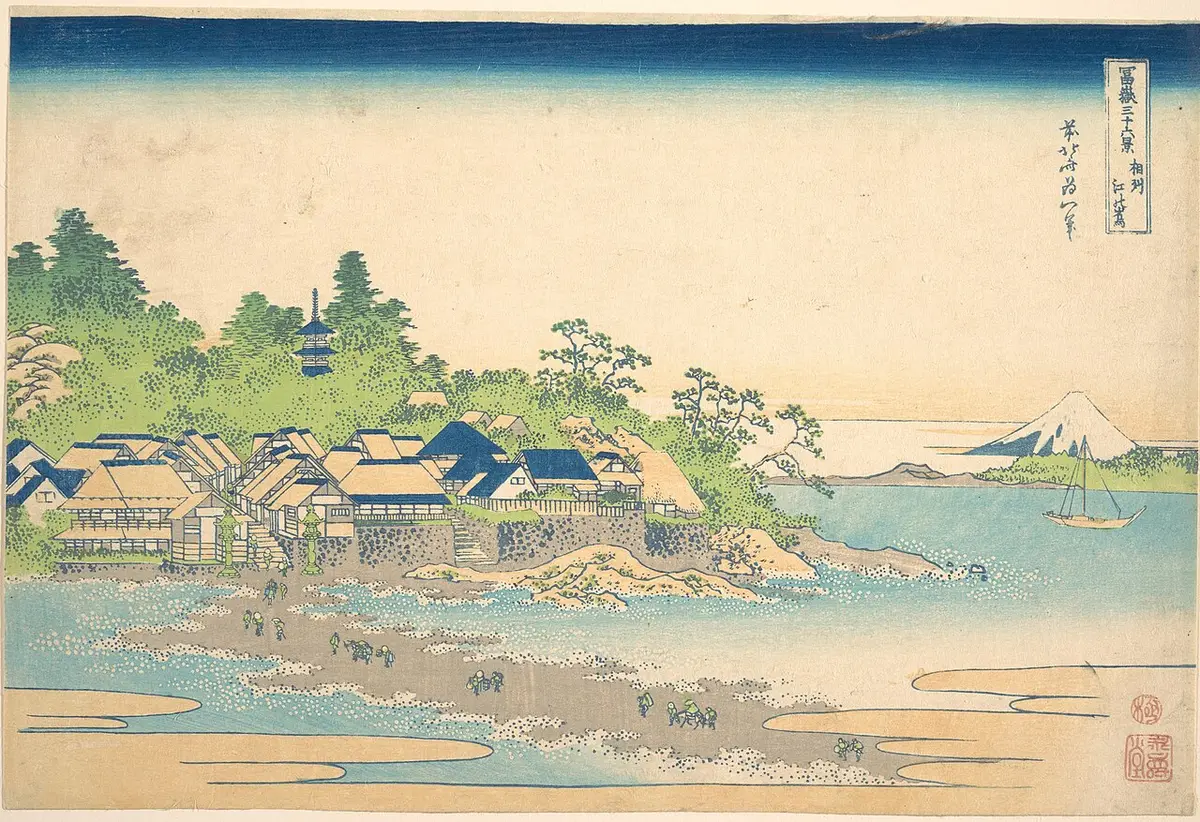
Table of contents
Kamakura in winter means three things: the New Year crowds at Tsurugaoka Hachimangu in the first days of January, plum blossoms from late January through February, and clear, dry days when Mt. Fuji stands behind Enoshima. Outside the New Year rush it is one of the calmest times to visit: December drew fewer visits than any month but September in 2025, and the temples are open as usual, if a little shorter in the afternoon. Below: what New Year involves and how to handle it, the shrine’s winter peony garden, when the plums flower, and where to stand for Fuji.
What winter in Kamakura is like
The Japan Meteorological Agency’s 1991 to 2020 normals for Yokohama, the closest full weather station, describe a mild, dry winter:
| Month | Daily high / low | Rain | Rain days | Sunshine |
|---|---|---|---|---|
| December | 12.5°C / 5.2°C (54°F / 41°F) | 66 mm | 6 | 178 h |
| January | 10.2°C / 2.7°C (50°F / 37°F) | 65 mm | 5 | 193 h |
| February | 10.8°C / 3.1°C (51°F / 38°F) | 65 mm | 5 | 167 h |
Yokohama averages about two nights below freezing in January and again in February, and the Kamakura tourism association says daytime temperatures rarely drop below zero. A warm coat, gloves and a hat are enough. January has more sunshine than any month except August, which is why winter is the season for views.
Crowds swing hard. The City of Kamakura counted 819,461 visits in December 2025, then 3.53 million in January, a number swollen by New Year shrine visits, and 1.13 million in February. Avoid the first days of January and the season is quiet.
Temple hours shrink a little. Engakuji closes at 16:00 from December to February instead of 16:30, and the Great Buddha at 17:00 from October to March. Plan your last stop for mid-afternoon.

New Year in Kamakura
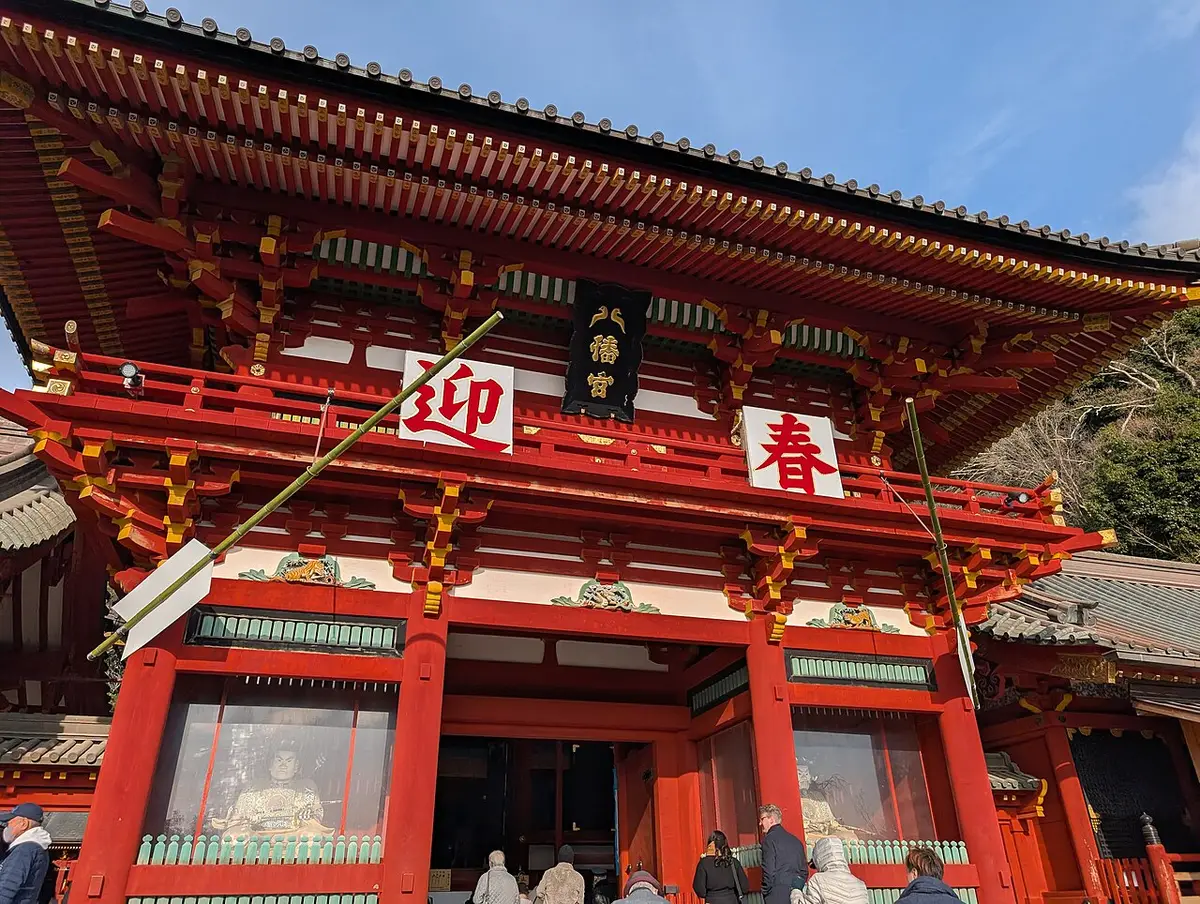
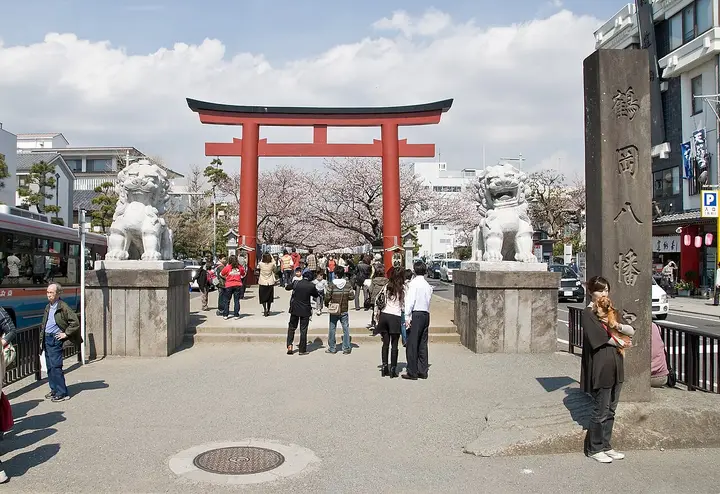
Hatsumode, the first shrine visit of the year, makes January Kamakura’s busiest month by far. The focus is Tsurugaoka Hachimangu.
Tsurugaoka Hachimangu at New Year
For New Year 2026 the shrine was open around the clock from December 31 to January 3. On January 4 it opened from 0:00 to 20:00, and from January 5 it went back to its normal 6:00 to 20:00. The shrine posts each year’s New Year hours in December.
The shrine’s own rites mark the first weeks:
- December 31: the Joya-sai closes the old year.
- January 1: the Saitan-sai New Year rite begins at 5:00, followed by the kagura dance of the shrine maidens from 7:00 at the Maiden stage.
- January 1 to 7: the Gohan gyoji, when a sacred seal normally kept deep in the main hall is pressed to visitors’ foreheads for health and protection from misfortune. Students facing entrance exams queue for it too.
- January 4: the Chona-hajime, a ceremonial start to the year’s building work, in which a sacred log is carried along the Dankazura.
- January 5: the Jomashinji archery rite from 10:00, with arrows shot at a target about 156 cm across from 27 m.
- January 15: the Sagicho bonfire at 7:00 by the Genji pond, where New Year decorations are burned.
Fee freeNew Year hours 24 h Dec 31 to Jan 3; normally 6:00-20:00From Kamakura Stn 10 min walk (east exit)MapOfficial site
Crowds, traffic and what to bring
In the busiest hours, police and guards control the flow of people into the shrine, and you cannot carry a stroller up the great stone steps. The shrine streams a live camera of its grounds on its website, so you can check the queue before you leave your hotel. Pets are asked to stay home.
The City of Kamakura closes the roads around Kamakura Station to traffic from 23:00 on December 31 to 17:00 on January 1, and from 9:00 to 17:00 on January 2 and 3, and the bus and taxi stands move. Come by train; the getting there guide has times from Tokyo, Shinjuku and Yokohama.
To see the shrine at New Year without the worst of it, go from January 4 onward, when hours return toward normal. The peony garden and the treasure hall are open in the first weeks too.
Many visitors dress for the occasion: the kimono experience at the Komachi-dori entrance dresses you a minute from Kamakura Station.

Ringing the bell at Hasedera
On New Year’s Eve, Hasedera lets visitors strike its temple bell, but only by application. For 2026 you had to send a Japanese return postcard (ofuku hagaki) that reached the temple by November 30. If more than 108 groups apply there is a lottery, and up to four people (elementary-school age and up) strike the bell together, for a donation. From 23:00 on December 31, roads around Hasedera close to cars, and some train lines do not run through the night. Details are on the temple’s notice.
The winter peony garden
By the Genji pond inside Tsurugaoka Hachimangu, the Shinen peony garden is a strolling Japanese garden planted with New Year peonies and spring peonies, and busy when either is in flower. For the 2026 season it opened from January 1 to mid-February, for as long as the flowers last, from 9:00 to 16:30 with last entry at 16:00.
Fee ¥500Season Jan 1 to mid-February (2026)Hours 9:00-16:30, last entry 16:00MapOfficial site
Plum blossoms
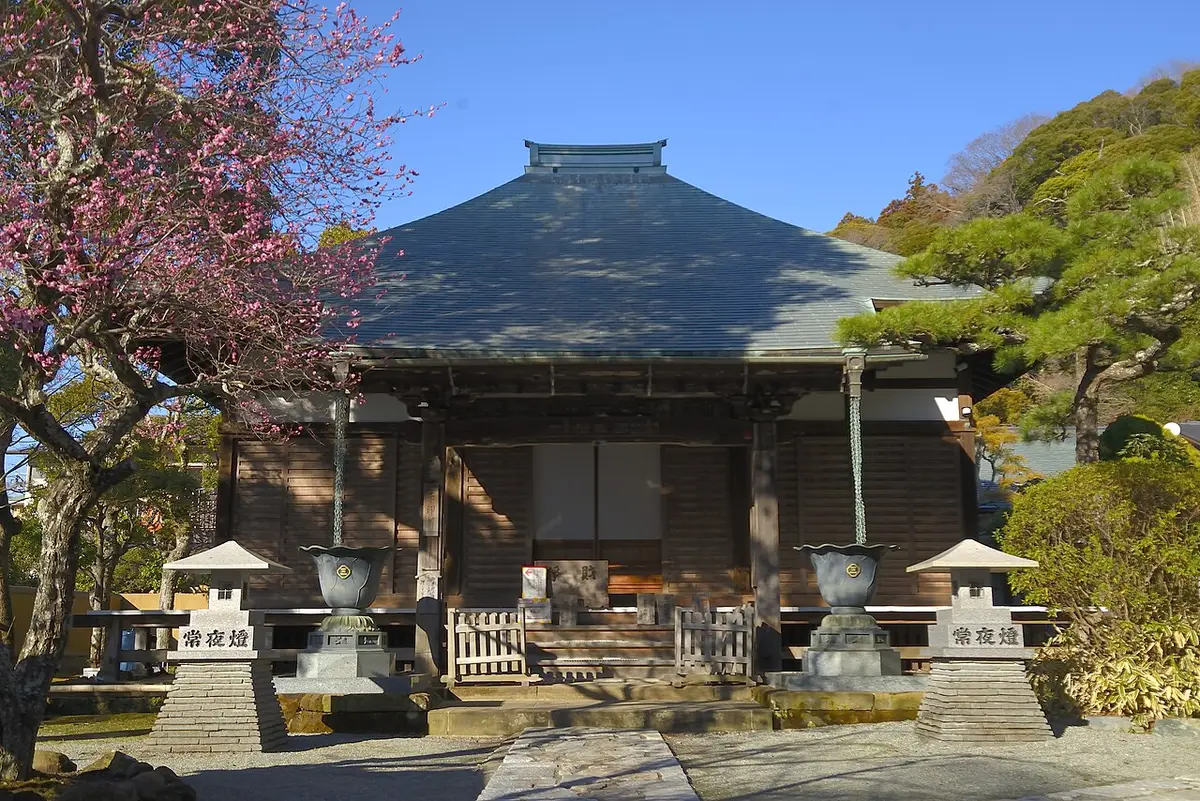
Kamakura’s plums flower in the coldest weeks. The Japan Meteorological Agency records the ume first bloom at the Yokohama observatory: January 13 in 2026, January 31 in 2025. Over the 19 recorded years from 2007 to 2026 the median date was January 30, the earliest January 13 (2026) and the latest March 1 (2012). The 1991 to 2020 normal is February 1. These are Yokohama dates, so treat them as a guide: in most years, February is plum month.
Temples that list plum among their winter flowers:
- Engakuji, a minute from Kita-Kamakura Station; ¥500, 8:30 to 16:00 in winter.
- Kamakura-gu, in Nikaido; grounds free.
- Zuisenji, in Nikaido, with daffodils and camellias too; ¥200, 9:00 to 17:00.
- Hasedera, in Hase, with camellias; ¥400, 8:00 to 16:30 entry.
Engakuji and Hasedera fit into a normal day route. Kamakura-gu and Zuisenji are a bus ride east of the center, from stop 5 at Kamakura Station’s east exit to Daitonomiya; Zuisenji is about 10 minutes on foot from the stop. The calendar shows the plum window alongside the rest of the year.

Mt. Fuji on clear winter days
Dry winter air is the best chance all year to see Mt. Fuji from Kamakura’s coast. Pick a clear, dry day; at dusk the mountain can stand out in silhouette against the sunset.
Inamuragasaki
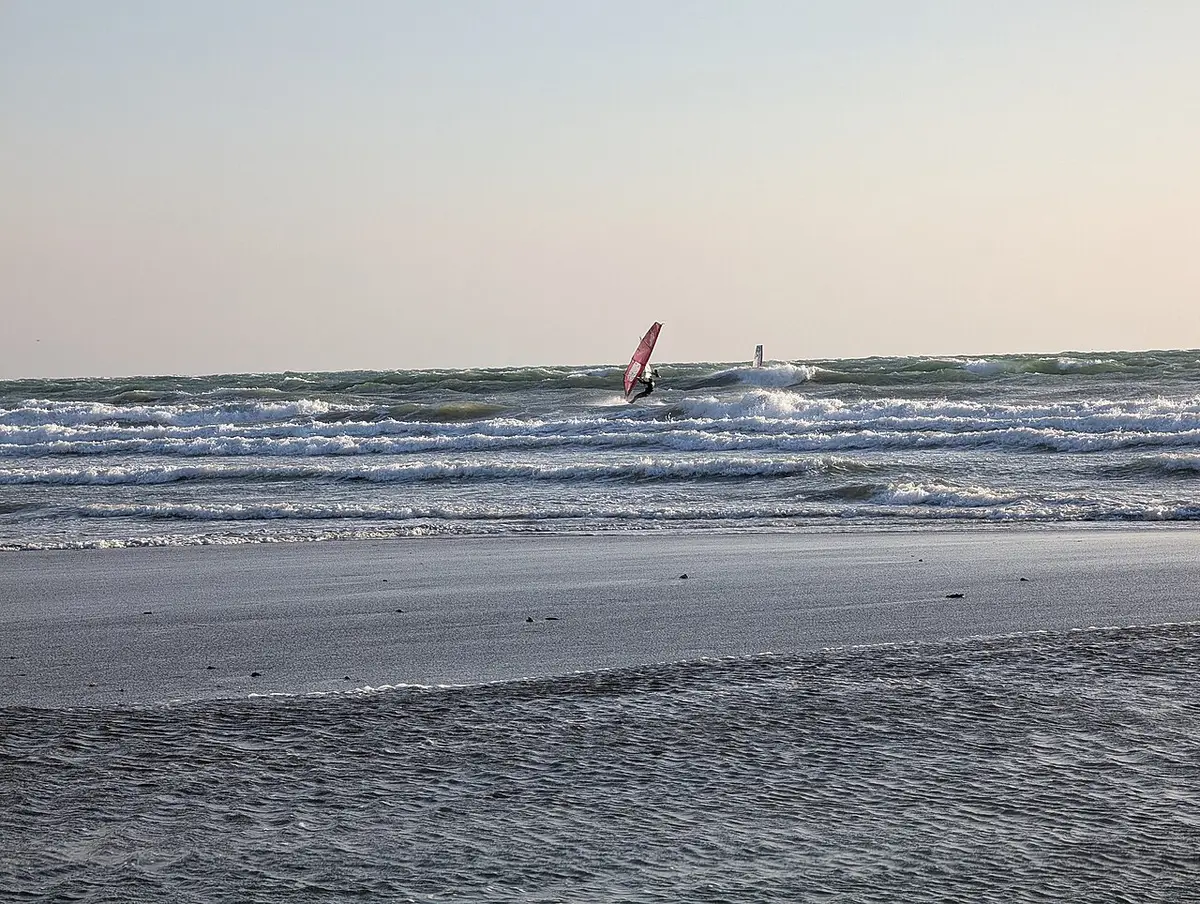
The cape of Inamuragasaki is part of Kamakura Kaihin Park. The City of Kamakura says that in winter, Fuji is often clearly visible behind Enoshima from its observation deck. The view takes in the long curve of Shichirigahama beach, which Hokusai and Hiroshige both drew. The cape is also a national historic site, the place where, according to legend, the warrior Nitta Yoshisada waded around the point. Entry is free.
Fee freeFrom Inamuragasaki Stn 5 min walkEnoden from Kamakura 10 min, ¥220MapOfficial site
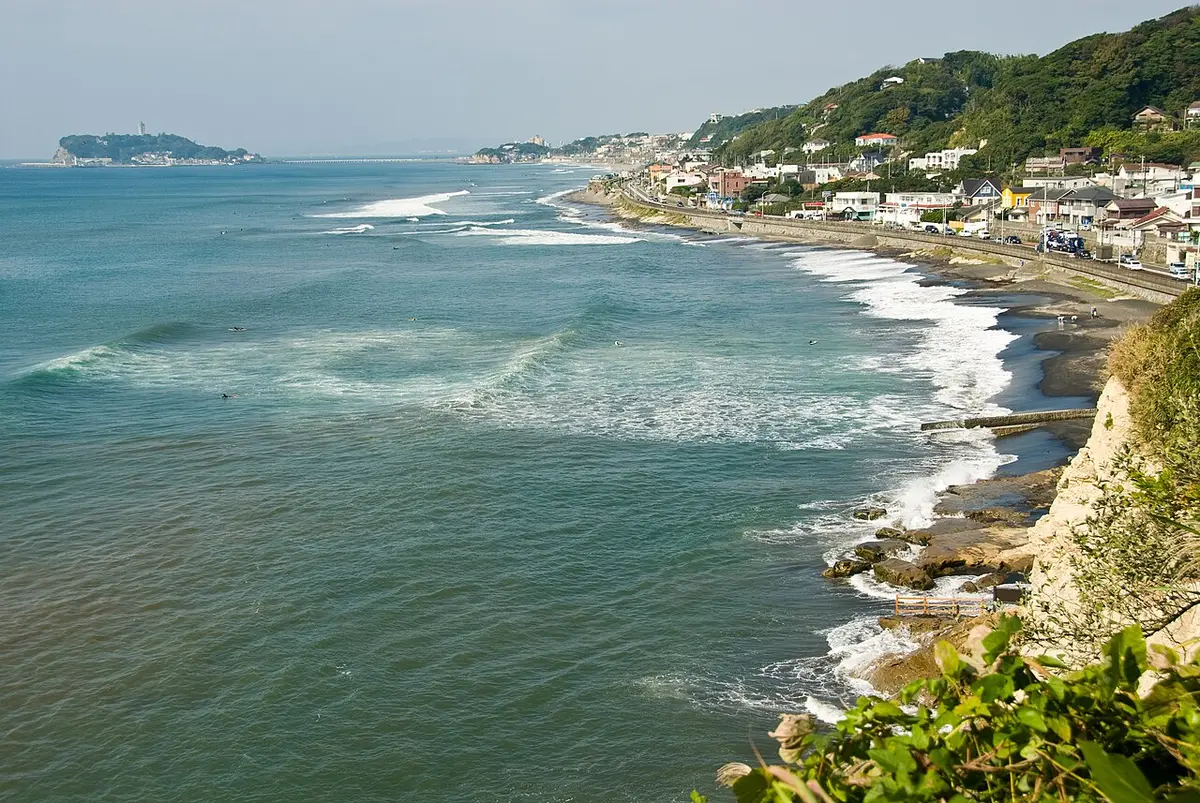

Enoshima and the Sea Candle
On Enoshima, the Sea Candle observation lighthouse stands in the Samuel Cocking Garden at the top of the island. Its glass observation room is 101.5 m above the sea, and its outdoor deck above looks out to Mt. Fuji, the Izu Peninsula, Hakone and the Tanzawa mountains. From December 1, 2026 to February 28, 2027 the Shonan no Hoseki illumination lights the garden and the tower. The lights come on at 17:00 and stay on until 20:00 on weekdays and 21:00 on weekends, holidays and December 19 to 30; from January 16 they come on at 17:30. During the illumination the garden charges ¥500 after 17:00; it is free in the daytime. Arrive before sunset to see the sky change and then the lights. From Shinjuku, Klook’s Enoshima Sky View ticket pairs the Odakyu round trip with the Escar and the Sea Candle.
Sea Candle ¥800 (child ¥400)Hours 9:00-20:00, last entry 19:30Garden after 17:00 ¥500 during the illuminationFrom Enoshima Stn about 24 min on footMapOfficial site
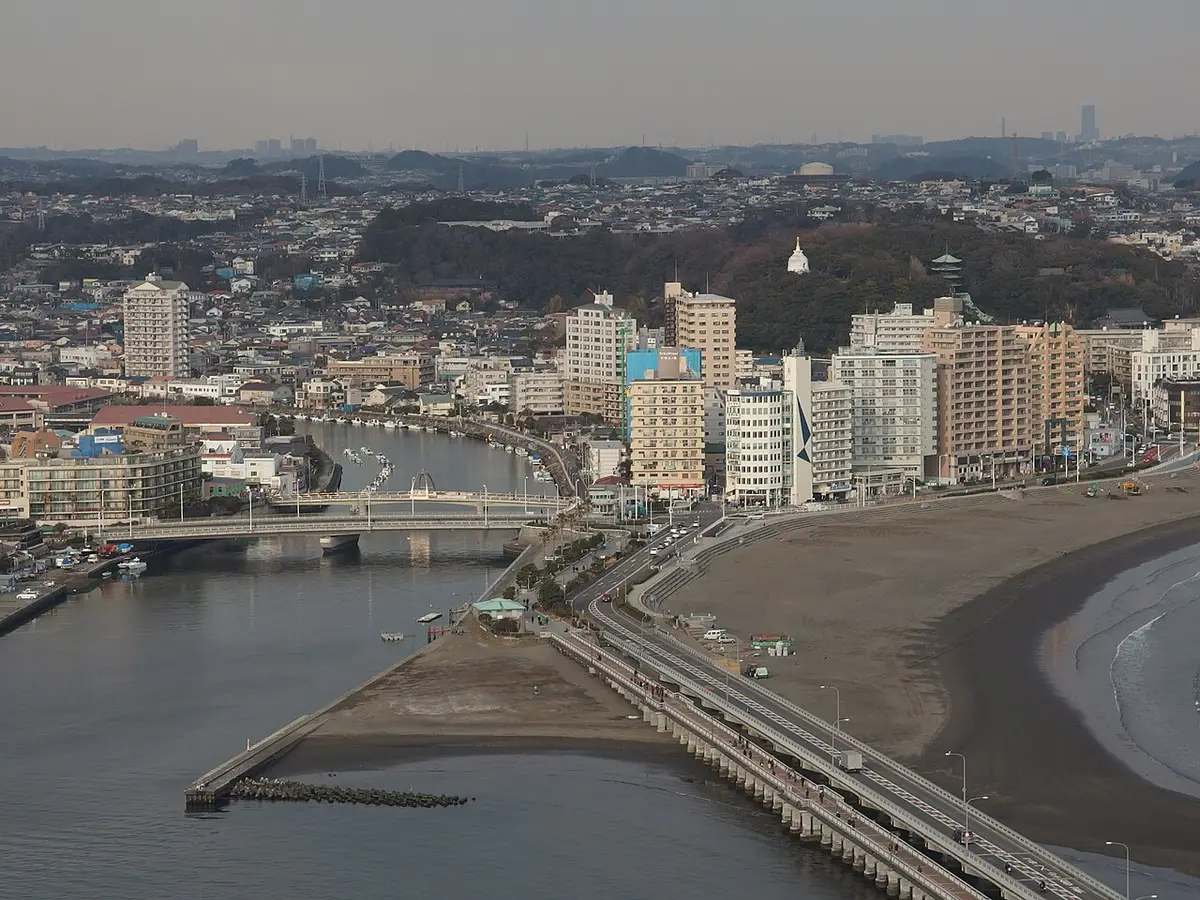

Kenchoji’s Shojoken deck
For a walk with a view, climb behind Kenchoji past Hansobo shrine to the Shojoken observation deck, which looks from Sagami Bay to Mt. Fuji. VISIT KAMAKURA puts it at about 30 minutes from the main gate, including a steep flight of about 250 steps. Kenchoji’s ¥500 admission applies, and the temple is open 8:30 to 16:30.
A winter day, from plum to sunset
This route fits the short winter day: temples in the morning, the coast in the afternoon, and Enoshima’s lights after dark.
- 8:30, Engakuji. Plum blossoms in February, a minute from Kita-Kamakura Station. Engakuji closes at 16:00 in winter, so it goes first.
- Late morning, Tsurugaoka Hachimangu. About 13 minutes on foot from Kenchoji, or 10 minutes from Kamakura Station. In January and early February, add the peony garden.
- Lunch, Komachi-dori. The shopping street between the station and the shrine; see Kamakura food.
- Afternoon, the Enoden to Inamuragasaki. Ten minutes from Kamakura on the Enoden, then five minutes on foot to the cape for Fuji over Shichirigahama. Stop at Hasedera on the way if you have time; it is a 5-minute walk from Hase Station.
- Sunset and evening, Enoshima. Carry on along the line to Enoshima Station and walk over to the island for the Sea Candle and the Shonan no Hoseki lights. To stay on the island, Iwamotoro is a ryokan on Enoshima.
Fares for the whole day, with the Enoden and temple fees, are in the trip cost calculator; full routes with train times are on the itinerary page. Out of season, the beaches make a good walk; see Kamakura beaches. If the weather is clear and you are fit, the hiking trails are at their most comfortable in the cool, dry months. A guided hidden trails day hike follows the Daibutsu trail with a licensed local guide.
Winter holidays and events
- Friday, January 1, 2027: New Year’s Day; the busiest days are January 1 to 3.
- Monday, January 11, 2027: Coming of Age Day, a three-day weekend. Tsurugaoka holds its coming-of-age rite on the day.
- January 15: the Sagicho bonfire at Tsurugaoka.
- Early February (Setsubun): a bow-string rite and bean throwing at Tsurugaoka.
- Thursday, February 11 and Tuesday, February 23, 2027: National Foundation Day and the Emperor’s Birthday, both busy plum days.
Where to stay for a winter trip
A night in Kamakura makes New Year and Fuji mornings much easier. For hatsumode, stay near the station: Hotel Metropolitan Kamakura is a short walk from Kamakura Station. For Fuji at sunrise or sunset, the coast is better: Kamakura Prince Hotel is on the Shichirigahama shore between Inamuragasaki and Enoshima. The where to stay in Kamakura and where to stay in Enoshima guides compare more options.
Questions people ask
Is Kamakura worth visiting in winter?
Yes. Winter is dry and clear, with Yokohama's normal January high around 10°C (50°F) and only about five rain days a month from December to February. December and February are quieter than spring and autumn, plum blossoms flower from late January, and clear mornings bring the best views of Mt. Fuji from the coast.
What is New Year like in Kamakura?
Very busy. Tsurugaoka Hachimangu stays open all night from December 31 to January 3, and January 2025 counted 3.53 million visits in Kamakura, more than any other month. Roads around Kamakura Station close to traffic, so come by train, and expect queues and crowd control on the shrine steps.
When do plum blossoms bloom in Kamakura?
At the Yokohama observatory the plum first bloom has a 1991 to 2020 normal of February 1, and over the last 20 recorded years the median was January 30, with dates from January 13 to March 1. Most plum trees are at their best in February.
Where can you see Mt. Fuji in Kamakura?
From the observation deck at Inamuragasaki, five minutes on foot from Inamuragasaki Station on the Enoden, where Fuji often appears behind Enoshima in winter, and from the Enoshima Sea Candle, 101.5 m above the sea. Clear winter mornings give the best chance.
Does it snow in Kamakura?
A little, on a few days a year, and it rarely settles for long. Yokohama's 1991 to 2020 normals show about 4 cm of snowfall over all of January and about 4 cm over February, and only about two nights below freezing in each month. The Kamakura tourism association says daytime temperatures rarely drop below zero.
Read next
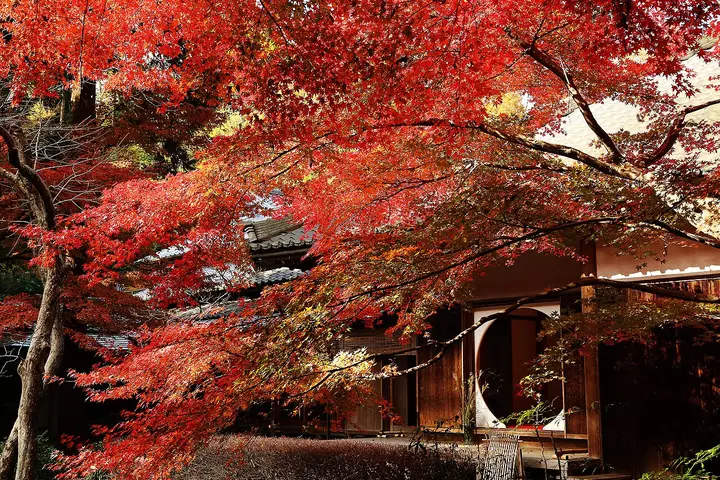 Best time to visitMonth by month: blooms, leaves, crowds and weather.
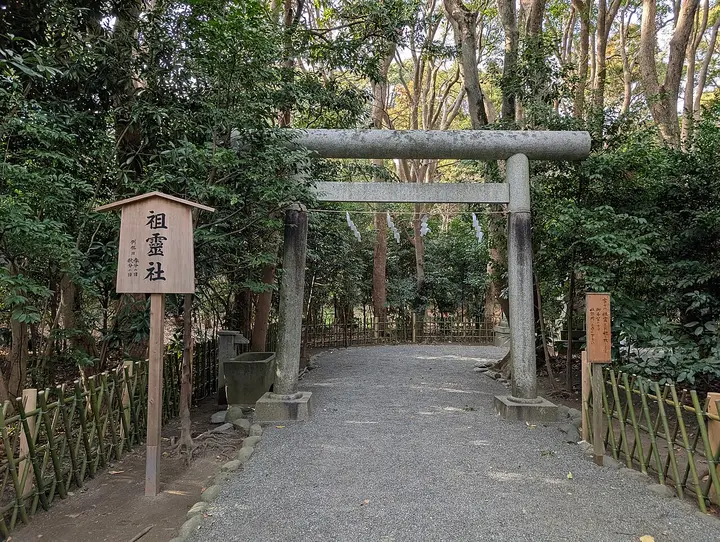 Tsurugaoka HachimanguKamakura's main shrine, festivals and the Dankazura path.
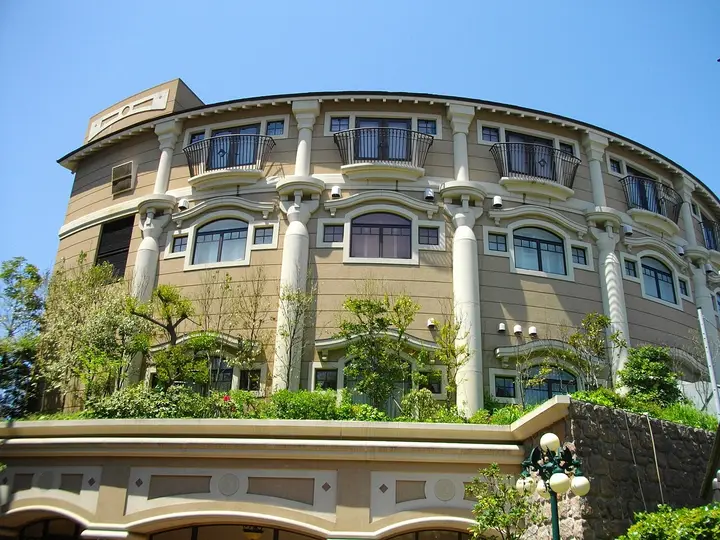 EnoshimaThe island route, the caves, the Sea Candle and sunset over Fuji.
 Bloom and crowd calendarModelled 2027 dates for cherry, hydrangea, ginkgo and maple.
Sources (19)
- Tsurugaoka Hachimangu (official): New Year 2026 visiting hours
- Tsurugaoka Hachimangu (official): New Year 2026 facilities and peony garden (PDF)
- Tsurugaoka Hachimangu (official): festivals by month
- Tsurugaoka Hachimangu (official): grounds
- City of Kamakura: New Year traffic restrictions
- Hasedera (official): New Year's Eve bell application
- Japan Meteorological Agency: ume first bloom 2025-2026
- Japan Meteorological Agency: ume first bloom records (PDF)
- Japan Meteorological Agency: climate normals 1991-2020, Yokohama
- Japan Meteorological Agency: climate normals, Yokohama (frost days)
- City of Kamakura: Kamakura Kaihin Park (Inamuragasaki)
- VISIT KAMAKURA: viewing Mt. Fuji from Kamakura
- VISIT KAMAKURA: seasons
- Enoshima Sea Candle (official): tower
- Enoshima Sea Candle (official): Shonan no Hoseki 2026-2027
- Engakuji (official): visiting hours
- City of Kamakura: tourism statistics 2025 (monthly visits)
- Cabinet Office: national holidays 2027
- Enoden: fares between stations